

 en
en
 English
 русский
 Español
 عربى
عربى ไทย
ไทยHow to Choose the Right Portable Temporary Container House for Your Modular Project?
2026-06-01 - Last Updated: 2026-06-01
Content
- 1 What Makes a Modular Temporary Building Different from Traditional Construction
- 2 Modular Cleanroom Construction: Core System Components
- 3 Temporary Container Camp: Industry Applications and Configuration Options
- 4 Modular Cleanroom Construction vs. Conventional Cleanroom Build: A Practical Comparison
- 5 Kaisier's Temporary Building System: Integration with Cleanroom Technology
- 6 Modular House Design Principles for Long-Duration Deployments
- 7 Procurement Checklist: Evaluating a Portable Temporary Container House Supplier
When a project demands a clean environment or workforce accommodation within days — not months — the answer is modular construction. A portable temporary container house integrated with modular cleanroom construction delivers controlled environments, worker camps, and on-site offices as pre-engineered, factory-built units that arrive ready to connect. This is not a workaround. It is the engineered standard for mining, pharmaceutical, semiconductor, and remote infrastructure projects worldwide.
What Makes a Modular Temporary Building Different from Traditional Construction
Traditional on-site construction requires sequential trades, weather dependency, and multi-month timelines. A modular temporary building reverses this model: walls, flooring, structural frames, filtration, and electrical are assembled in a factory under controlled conditions, then shipped as finished units.
The structural backbone of most systems is a cold-bending galvanized steel frame with bolt-and-slot connections — eliminating welding on site. A 20-foot container module can be erected by two to three workers in under four hours. For a 50-unit temporary container camp housing 300 workers, total deployment time is typically five to seven days, compared to six to eight weeks for conventional block construction.
| Factor | Traditional Construction | Modular Container Building |
|---|---|---|
| Typical Lead Time (50 rooms) | 6 – 8 weeks | 5 – 7 days on site |
| Labor Required | Multi-trade crews | 2 – 4 workers per unit |
| Relocatability | None | Full — crane or flatbed transport |
| Reuse Potential | None after demolition | 15+ year service life, damage-free disassembly |
| Construction Waste | High (site cut waste) | Near zero (factory-prefabricated) |
Modular Cleanroom Construction: Core System Components
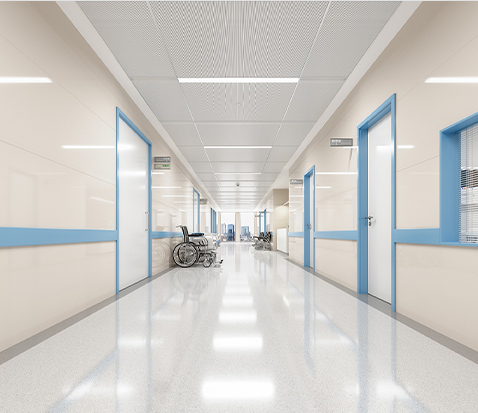
A modular cleanroom is not a tent or a sealed room — it is a precision-engineered enclosure designed to meet ISO 5 through ISO 8 cleanliness classifications. Zhejiang Kaisier Clean Technology, operating production bases in both China and Thailand, builds these systems around four primary component families.
Modular Cleanroom Panel and Wall Panel Systems
The enclosure of any cleanroom begins with its wall and ceiling panels. Modular cleanroom wall panels at Kaisier are available in three core configurations: handmade panels for customized geometries, machine-made panels for high-volume repeatability, and stainless steel panels for corrosive or ultra-high-hygiene environments.
Panel cores determine thermal and acoustic performance. Rock wool cores offer fire resistance with a flame spread index of Class A1. Polyurethane cores provide superior thermal insulation (thermal conductivity approximately 0.022 W/m·K), suitable for cold-chain pharmaceutical environments. Magnesium oxysulfate cores balance fire resistance and moisture control for high-humidity applications like food processing.
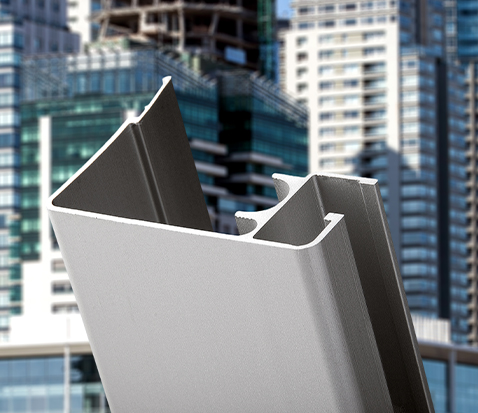
All panels use aluminum extrusion profiles at joints, creating flush interior surfaces with no exposed fasteners — a requirement under GMP standards that prohibit dust-accumulating recesses. Surface roughness Ra on stainless steel panels is held to 0.4 micrometers or below, enabling validated cleaning and disinfection cycles.
Modular FFU Unit: The Air Quality Engine
The fan filter unit (FFU) is the active heart of any modular cleanroom. Each modular FFU unit combines an EC (electronically commutated) motor-driven fan with an integrated HEPA or ULPA filter in a self-contained ceiling module. Key performance parameters for a well-specified FFU include:
| Parameter | HEPA FFU (ISO 6 – 8) | ULPA FFU (ISO 4 – 5) |
|---|---|---|
| Filter Efficiency | 99.99% at 0.3 micron | 99.9995% at 0.12 micron |
| Typical Airflow Velocity | 0.35 – 0.45 m/s | 0.45 – 0.55 m/s |
| Noise Level | below 55 dB(A) | below 58 dB(A) |
| Power Consumption (600x1200mm) | 55 – 90 W | 90 – 150 W |
| Speed Control | 0 – 10V analog or BACnet/Modbus | 0 – 10V analog or BACnet/Modbus |
EC motor FFU units reduce energy consumption by 30 to 40 percent compared to older AC motor designs. For a 200-square-meter cleanroom at ISO 7, this translates to annual savings of approximately 12,000 to 18,000 kWh — a significant operational cost reduction over a five-year project lifecycle.
Temporary Container Camp: Industry Applications and Configuration Options
A temporary container camp is deployed wherever a permanent facility cannot be justified, built quickly enough, or relocated when operations move. The modular container building format allows camp configurations to scale from a single office unit to multi-story accommodation villages housing over 900 workers — as documented in a 2025 WELLCAMP deployment in Malaysia's remote mining sector.
Application Sectors
The industries driving demand for portable temporary container house solutions share a common challenge: they operate in remote, rapidly changing, or short-duration environments where conventional construction is not viable.
| Industry | Typical Use Case | Key Requirement |
|---|---|---|
| Mining and Resources | Worker dormitories, mess halls, site offices | Wind and seismic resistance, rapid relocation |
| Oil and Gas | Remote field camps, command centers | Explosion-zone compliance, weatherproofing |
| Construction | On-site worker housing, project offices | Fast deployment, stackable multi-story |
| Pharmaceuticals | Portable cleanroom for interim production | ISO cleanliness class, GMP compliance |
| Semiconductor/Electronics | Temporary fabrication enclosures | ESD control, HEPA/ULPA filtration |
| Emergency Response | Mobile clinics, command units | 24-hour deployment, medical-grade surfaces |
Structural Configuration Flexibility
Modern modular temporary building systems support a wide range of spatial configurations without requiring design changes at the factory. Standard options include single-unit standalone modules, side-by-side row arrangements creating open floor plans, two- and three-story stacked configurations with internal staircases, and L- or U-shaped camp layouts with covered walkways. Each configuration uses the same base module, which means inventory, transport logistics, and replacement parts are standardized across an entire camp.
Modular Cleanroom Construction vs. Conventional Cleanroom Build: A Practical Comparison
Procurement teams evaluating cleanroom construction projects often face pressure to choose between a conventional built-in-place cleanroom and a modular cleanroom system. The modular approach has clear advantages in speed and flexibility, but specific project parameters should drive the decision.
| Consideration | Conventional Cleanroom | Modular Cleanroom Construction |
|---|---|---|
| Construction Timeline | 3 – 12 months | 2 – 8 weeks (factory-to-commissioning) |
| Dust Generation During Build | High — affects adjacent areas | Minimal — pre-finished panels, dry assembly |
| Reconfiguration Cost | Very high (structural demolition) | Low — panel systems are demountable |
| Capital vs. Operating Cost | Lower capex, higher lifetime maintenance | Higher capex, lower maintenance and energy cost |
| ISO Classification Range | ISO 4 – 8 | ISO 5 – 8 standard; ISO 4 – 5 with ULPA FFU |
| Regulatory Qualification | Full IQ/OQ/PQ required | Factory pre-validated, simplified on-site qualification |
For pharmaceutical companies expanding production capacity during a product launch window, the 2-to-8-week commissioning timeline of a modular cleanroom versus 6-to-12 months for conventional construction can mean the difference between on-time market entry and a delayed launch costing millions in lost revenue.
Kaisier's Temporary Building System: Integration with Cleanroom Technology
Zhejiang Kaisier Clean Technology occupies a unique position in the market: the company produces both modular cleanroom components and temporary building system products under the same quality management framework — ISO 9001, ISO 14001, and ISO 45001 certified. This means a client requiring a portable temporary container house with an integrated cleanroom zone can source both the structural container system and the interior cleanroom panels, FFU units, pass-through windows, air showers, and aluminum profiles from a single supplier.
The company's production network spans four manufacturing bases in China and Thailand, forming what Kaisier describes as a "domestic coordination + international radiation" supply model. The Thailand facility is particularly relevant for Southeast Asian projects where import duties on Chinese-manufactured goods would otherwise reduce cost competitiveness.
Kaisier's cleanroom panel range achieves fire resistance, antibacterial, and antistatic performance standards that the company describes as internationally leading, targeting the healthcare, electronics, and food processing sectors — all industries where portable temporary container house deployments are growing due to capacity expansion pressures and facility renovation programs that require production to continue uninterrupted.
Modular House Design Principles for Long-Duration Deployments
For deployments lasting more than six months, the modular house must transition from a temporary structure to a functional, comfortable environment that supports productivity and wellbeing. Design choices that distinguish long-duration deployments from basic site offices include:
Insulation specification matters more than most buyers realize. Standard EPS-core panels (thermal conductivity 0.038 W/m·K) are adequate for temperate climates but inadequate for tropical or arctic deployments. Polyurethane panels (0.022 W/m·K) reduce HVAC load by 35 to 45 percent in extreme climates, directly lowering fuel costs in remote camps where diesel generators supply all power.
Acoustic separation between dormitory, office, and recreation zones in a modular container building requires attention to both panel mass and junction detailing. Rock wool core panels with a surface density above 12 kg/m² achieve sound reduction indices (Rw) of 38 to 42 dB — sufficient for sleeping quarters adjacent to a generator room with proper vibration isolation.
Multi-story configurations — two or three levels — maximize site footprint efficiency when land is constrained. A 20-foot container stacked two high with a central steel staircase serves 12 to 16 workers in a footprint of 36 square meters, equivalent to a single-story arrangement requiring 72 square meters. For remote mining camps where helicopter-accessible flat land is limited to a few hundred square meters, this difference is operationally significant.
Procurement Checklist: Evaluating a Portable Temporary Container House Supplier
Buyers sourcing modular container buildings or modular cleanroom systems should evaluate suppliers against the following criteria before committing to a project:
Factory certification and QMS: Verify ISO 9001 scope coverage for both structural components and cleanroom-specific products. A supplier holding ISO 9001 only for general construction may not have validated processes for cleanroom panel surface treatments.
Panel fire rating documentation: Request third-party test certificates showing fire resistance classification (Class A1 for non-combustible, Class A2-s1,d0 for limited combustibility). Self-declared fire ratings without independent laboratory verification are not acceptable for healthcare or pharmaceutical applications.
FFU unit performance data: Ask for third-party IEST-RP-CC001 or EN 1822 filter test certificates with the specific FFU model. Efficiency claims at different particle sizes (0.3 micron for HEPA, 0.12 micron for ULPA) must be independently verified.
Reference projects: Request contact details for two to three completed projects of comparable scale and application. A supplier experienced with pharmaceutical cleanroom containers in Southeast Asia is preferable to one whose references are all basic construction site offices.
After-sales support network: For remote deployments, the supplier's ability to deliver replacement seals, filter elements, and FFU modules within 72 hours is often more valuable than the initial unit price. Confirm regional warehousing and service center locations before signing.
Message Feedback
Product Categories
Easily navigate and discover our complete range of solutions through our logically structured product
categories.



- E-Mail: [email protected]
- Tel: +86 18968239620
- Address: Room No.905, He Yuan Mansion, No. 382, Tianda Lane, Ningbo Southern Business District, Yinzhou Ningbo China
Quick Links
Contact Us
© Copyright Zhejiang Kaisier Clean Technology Co.,Ltd.
All Rights Reserved.
 Cleanroom Systems Manufacturer
Modular Cleanroom Solutions Factory
Cleanroom Systems Manufacturer
Modular Cleanroom Solutions Factory
-
+86 18968239620
-
-
