

 en
en
 English
 русский
 Español
 عربى
عربى ไทย
ไทย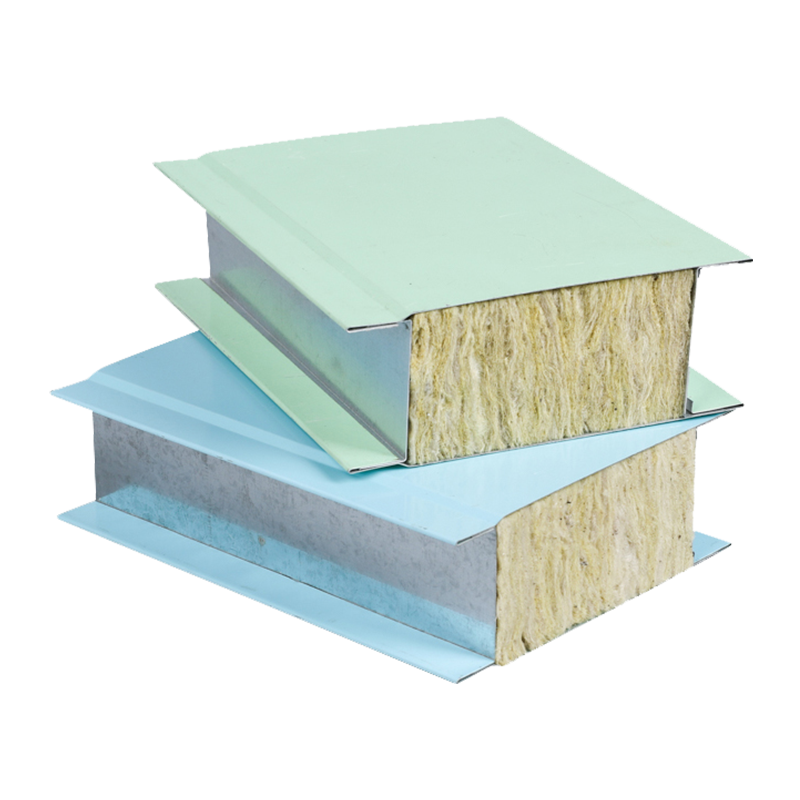
-
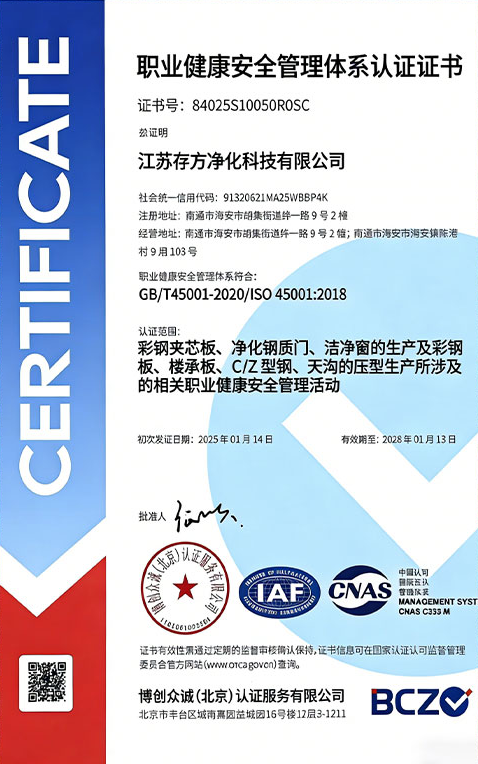
Kaisier Clean Technology Announces Official Operation of New Thailand Production Base, Enhancing Global Supply Chain Resilience
Jan, 30, 2026
Industry NewsZhejiang Kaisier Clean Technology Co., Ltd., a leading provider of high-performance cleanroom solutions, is proud to announce the official commencement of operations at its state-of-the-art production base in Thailand, u... -
Kaiser Unveils Next-Gen Antimicrobial Clean Panel Series, Setting New Benchmark for Healthcare & High-Tech Facilities
Jan, 30, 2026
Industry NewsInnovating at the intersection of safety and purity, Zhejiang Kaiser Clean Technology Co., Ltd. has launched its next-generation clean panel series, engineered with proprietary advanced surface treatment technology. This... -
Kaisier Clean Technology Showcases Total Cleanroom Solutions at SEMICON Southeast Asia 2024, Highlighting “One-Stop Service” Model
Jan, 30, 2026
Industry NewsZhejiang Kaisier Clean Technology Co., Ltd., together with its Thai subsidiary, successfully participated as an exhibitor at SEMICON Southeast Asia 2024, one of the region’s premier events for the microelectronics manufa...
Color steel sandwich panel Manufacturer
Product Categories
About Kaisier
Kaisier Cleans the Globe Tech Empowers Tomorrow
Zhejiang Kaisier Clean Technology Co.,Ltd. upholding the brand mission of "Kaisier Cleans the Globe, Tech Empowers Tomorrow", Zhejiang Kaisier Clean Technology Co., Ltd. and its Thai subsidiary are a technology-driven enterprise in the clean industry with a global layout. The company has built four modern production bases in China and Thailand, forming a "domestic coordination + international radiation" capacity network equipped with intelligent production lines and precision testing equipment to ensure stable and efficient supply.
We are a China OEM/ODM Color steel sandwich panel Company and Color steel sandwich panel Manufacturer, specialize in R&D, production and sales of a full range of clean panels, including color steel sandwich panels, rock wool clean panels and magnesium oxide clean panels, which can meet the stringent requirements of Class 100 to Class 300,000 air purification projects. Our products lead the world in fire resistance, antibacterial and antistatic performance, and are widely applied in high-end fields such as healthcare, electronics and food industries, providing one-stop services from solution design to after-sales support. With technological innovation as the core and the philosophy of "precision engineering for ultimate cleanliness", we are committed to delivering safe and reliable clean space solutions for global customers.
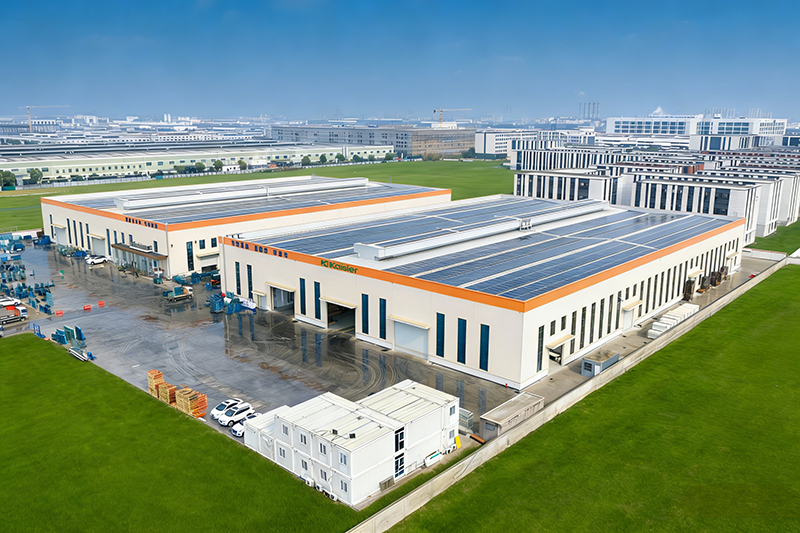
Certificate Of Honor
Our Latest News
Message Feedback
Color steel sandwich panel Industry knowledge
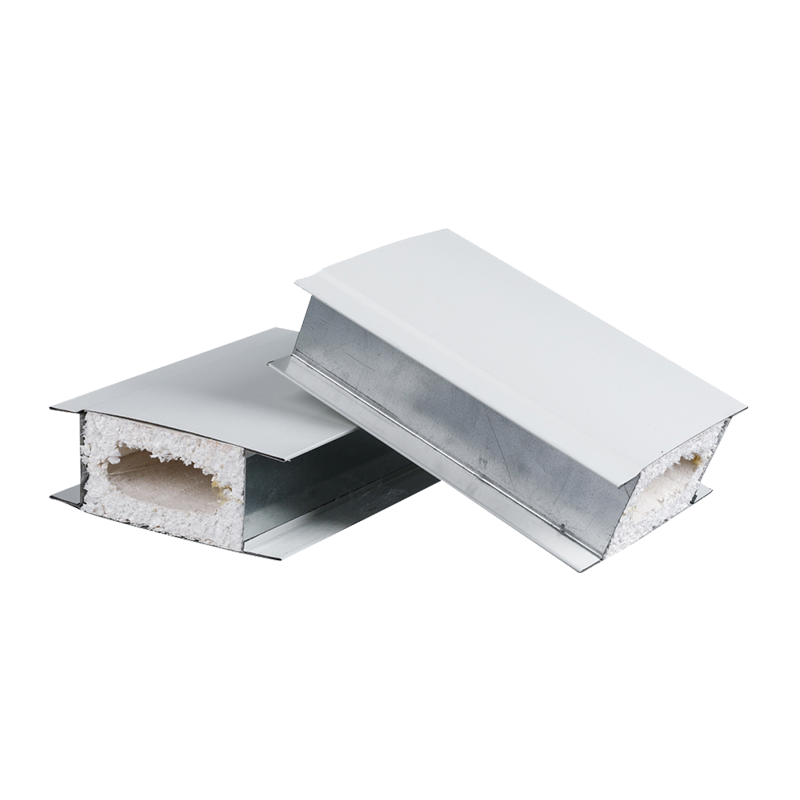
In industrial plants, cleanrooms, cold storage facilities, and public buildings, color steel sandwich panels have become the mainstream choice for wall and roof panels due to their "multi-functional in one panel" characteristics — integrating thermal insulation, fire resistance, sound insulation, and waterproofing. The clear conclusion is: The core material directly determines the panel's key performance — Polyurethane (PU) offers the best thermal insulation (thermal conductivity ≤0.024 W/m·K), Rock Wool offers the best fire resistance (Class A non-combustible), and EPS offers the best cost-effectiveness. Proper selection can reduce building energy consumption by 30%-50% while meeting various fire safety requirements. The following provides in-depth technical reference from four dimensions: core material comparison, application scenarios, installation key points, and economic analysis.
Core Material Performance Comparison: Comprehensive Analysis of Four Mainstream Core Types
The core performance of color steel sandwich panels is determined by the core material. A detailed comparison of four mainstream core materials is shown below:
| Core Material | Fire Rating | Thermal Conductivity (W/m·K) | Flexural Strength (MPa) | Water Absorption (%) | Relative Cost | Main Applications |
|---|---|---|---|---|---|---|
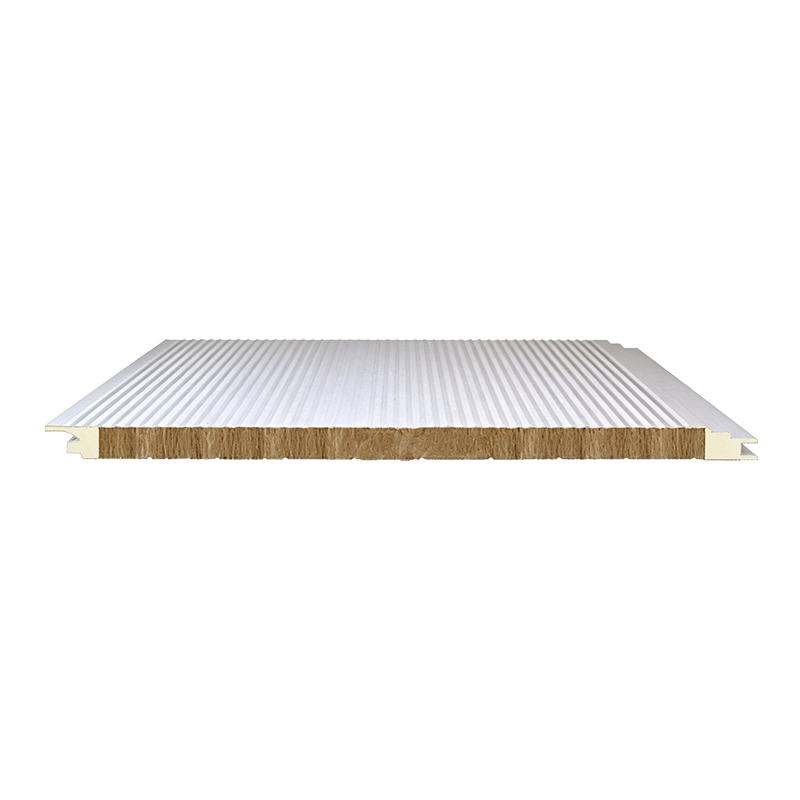
| Rock Wool | Class A (non-combustible) | 0.040-0.045 | 0.8-1.0 | ≤1.5% (water-repellent) | Baseline | Pharmaceutical, electronics, fire-controlled areas, cleanrooms |
| Polyurethane (PU) | Class B1/B2 (flame retardant) | 0.022-0.028 | 1.2-1.5 | ≤3% | +20-30% | Cold storage, temperature-controlled cleanrooms, energy-saving buildings |
| EPS (Expanded Polystyrene) | Class B2/B3 (combustible) | 0.035-0.041 | 0.6-0.8 | ≤4% | -20-30% | Temporary structures, low-budget warehouses, general partitions |
| Glass Wool | Class A (non-combustible) | 0.038-0.043 | 0.7-0.9 | ≤2% | +5-10% | Factories with high sound insulation requirements, equipment rooms |
Product Types: Wall Panels, Roof Panels, and Integrated Panels — Application Scenarios
Color steel sandwich panels are mainly divided into three types based on installation position and function:
| Product Type | Features | Common Core Materials | Typical Applications | Special Requirements |
|---|---|---|---|---|
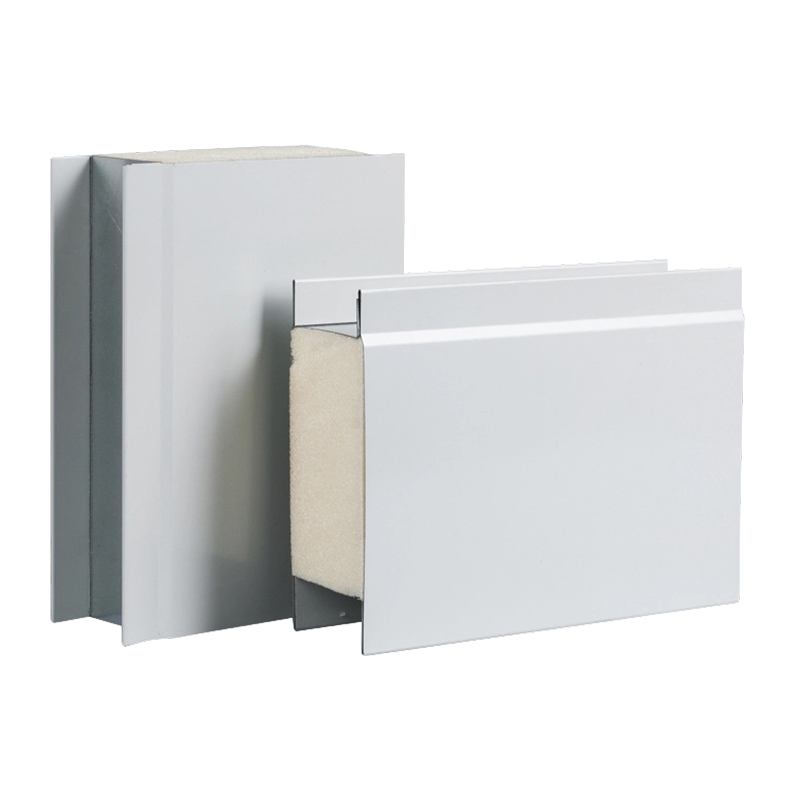
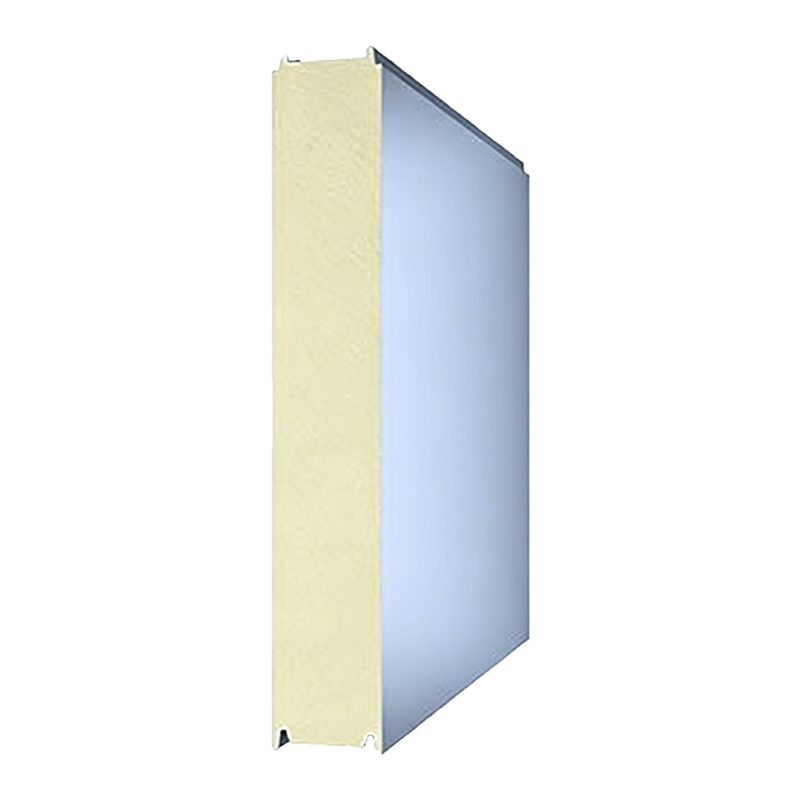
| Wall Flat Panel | Smooth surface, stable structure, easy to clean | Rock wool, PU, glass wool | Cleanroom exterior walls, industrial plant enclosures | Airtightness, wind pressure resistance, aesthetics |
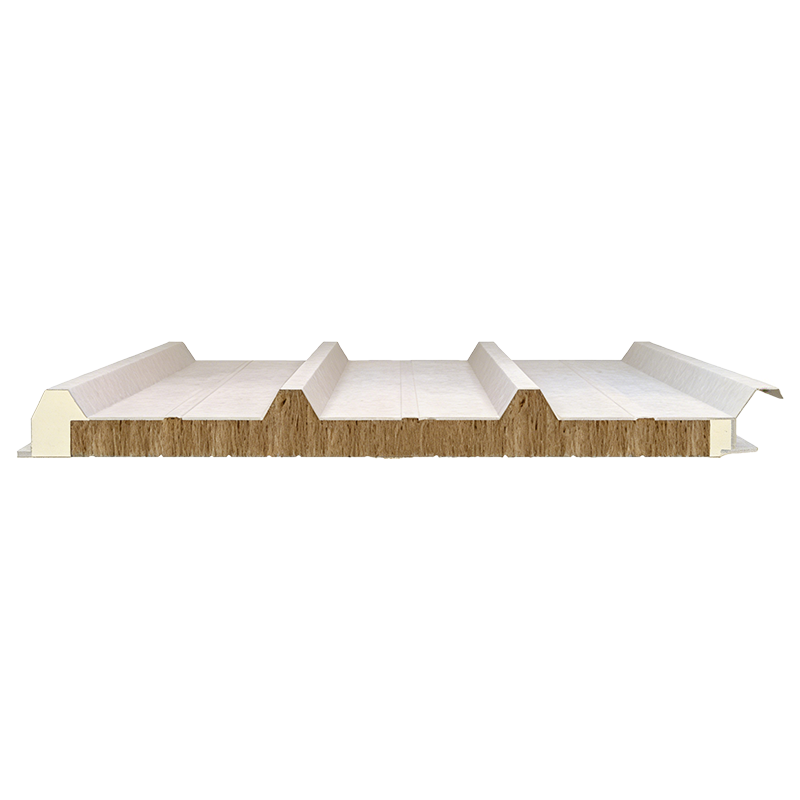
| Roof Panel | High strength, waterproof, wind uplift resistance | Rock wool, PU, EPS | Large-span plants, cold storage roofs | High load capacity, waterproof sealing, snow load resistance |
| PU Integrated Panel (PIR/PU) | Decoration + insulation + protection three-in-one | PIR/PU (rigid polyurethane foam) | External wall insulation and decoration, building retrofits | Weather resistance, color options, fast installation |
Installation and Connections: Tongue-and-Groove, H-Section Steel, and Center Aluminum Frame
The connection method for color steel sandwich panels directly affects structural integrity, airtightness, and aesthetics. Three mainstream connection methods are described below:
- Tongue-and-groove (male-female) connection: Panel edges are formed with matching male and female profiles, combined with a center-placed sealing gasket — offering the best airtightness (air leakage ≤0.3 m³/(h·m²) @100Pa). Suitable for cleanrooms, pharmaceutical workshops, and other high-airtightness applications. Typical tongue depth is 8-12mm;
- H-section steel/aluminum connection: Special H-profiles are inserted between panels for fast installation, suitable for large-area exterior walls and partitions. The gap between H-profile and panel should be ≤0.5mm, with a sealing gasket placed inside the profile;
- Center aluminum frame connection: Prefabricated aluminum alloy frames are embedded between panel joints, then covered with a snap-on cap. This connection allows bidirectional disassembly, facilitating later maintenance and replacement. Commonly used in laboratories and pilot plants requiring frequent reconfiguration.
Regardless of the connection method, neutral mildew-resistant silicone sealant must be applied at panel joints, with joint width controlled at 3-5mm, and the cured surface should form a concave arc shape to avoid dust accumulation. For roof panels, lap length should be ≥200mm, with waterproof screws installed at wave crests.
Key Application Points of Color Steel Sandwich Panels in Cleanroom Systems
In cleanroom system engineering, color steel sandwich panels are the core material for walls and ceilings. Key application points are as follows:
- Core material selection: For ISO Class 6 (Class 1,000) and above cleanrooms, rock wool sandwich panels (Class A fire rating) must be selected; for ISO Class 7-8, polyurethane sandwich panels are acceptable; for cold storage and temperature-controlled rooms, polyurethane is preferred;
- Facing material selection: Standard configuration is color-coated steel sheet with thickness 0.5-0.6mm; antibacterial polyester or PVDF coating is recommended. For humid or corrosive environments, 304 stainless steel panels should be selected;
- Panel thickness selection: Common thicknesses for cleanroom walls/ceilings are 50mm, 75mm, and 100mm. Use 50mm for low-load partitions; use 75-100mm for ceilings or tall partitions;
- Airtightness treatment: All panel joints, inside/outside corners, and door/window openings must be treated with sealant and coved corners to ensure air leakage ≤0.3 m³/(h·m²) at 50Pa differential pressure;
- Ceiling installation and reinforcement: Ceiling panels require additional hanger rods and grid systems, with suspension point spacing ≤1.2m. Suspension points must be located near the panel centerline, with no fewer than 4 points per panel.
A typical pharmaceutical cleanroom (ISO Class 6, 1000 m²) using 50mm rock wool sandwich panels with tongue-and-groove seals costs approximately USD 55,000-82,000 for materials and installation, while traditional brick wall + insulation construction costs USD 110,000-137,000 — with 2-3 times longer construction duration. Color steel sandwich panels offer clear advantages in both construction timeline and total cost.
Frequently Asked Questions (FAQ) About Color Steel Sandwich Panels
1. What is the service life of color steel sandwich panels? How can it be extended?
Service life depends primarily on the panel coating and core material quality: PE coating: 8-10 years; SMP coating: 12-15 years; HDP coating: 15-18 years; PVDF coating: 20-25 years. Methods to extend service life include: selecting high-durability coatings, regular cleaning (1-2 times per year), prompt repair of scratches, and avoiding chemical corrosive environments. Rock wool and PU cores maintain performance for over 30 years under normal use conditions.
2. Which is better — rock wool or polyurethane sandwich panels? How to choose?
Both have advantages depending on specific needs: Rock wool sandwich panels: Class A fire rating (non-combustible), suitable for strict fire-controlled areas (e.g., pharmaceutical, electronics cleanrooms), lower cost. Polyurethane sandwich panels: Best insulation performance (thermal conductivity ≤0.024 W/m·K), 40% more energy-efficient than rock wool at the same thickness, but fire rating is Class B1/B2 (flame retardant). Selection advice: Cleanrooms and hospital operating rooms must use rock wool; cold storage and temperature-controlled workshops should prioritize PU; general plants can decide based on local fire safety requirements.
3. What are the standard sizes of color steel sandwich panels? Can they be customized?
Standard specifications: Width: 1150mm, 950mm, 600mm; Thickness: 50mm, 75mm, 100mm, 150mm, 200mm; Length: typically 2m-12m, customizable as required. All specifications can be customized per project requirements, including non-standard widths, special thicknesses, and facing materials. It is recommended to confirm the optimal profile with the supplier during the design phase to minimize field cutting and material waste.
4. Are color steel sandwich panels environmentally friendly? Can they be recycled?
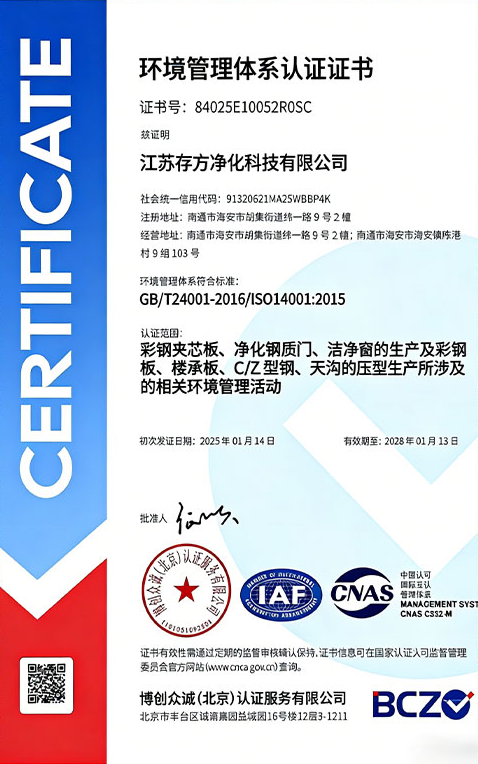
Color steel sandwich panels offer good environmental performance: ① The steel facing can be 100% recycled; ② Rock wool cores are made from natural stone, contain no asbestos, and can be recycled or used as filler material; ③ PU cores can be processed in specialized recycling facilities and converted into fuel or再生材料. Production processes are gradually adopting fluorine-free foaming technology to reduce ozone layer depletion. Choosing suppliers with environmental certifications (e.g., ISO 14001 certification) further reduces environmental impact.
5. What items should be inspected during on-site acceptance of color steel sandwich panels?
On-site acceptance should focus on the following five items:
- Appearance quality: No obvious scratches, color variation, or surface irregularities; uniform coating, no bubbles or rust spots;
- Dimensional deviation: Length/width deviation ≤±2mm, diagonal difference ≤2mm/m, thickness deviation ≤±0.5mm;
- Core density: Rock wool/glass wool cores should have no voids or delamination; PU cores should have no bubbles or cracks;
- Bond strength: Peel strength between facing and core should be ≥0.06 MPa;
- Fire certification: Verify factory test reports and third-party fire rating inspection reports (Class A/B1/B2).
6. Can color steel sandwich panels be used for exterior wall insulation and building retrofits?
Yes. PU integrated panels are specifically designed for exterior wall insulation and decoration, combining insulation layer, decorative layer, and protective layer in one panel. Installed via dry-hanging or adhesive mounting, they offer fast construction, reducing project timelines by more than 50%. Thermal conductivity ≤0.024 W/m·K meets 65%-75% of building energy saving requirements. Suitable for new building exterior walls and energy-saving retrofits of existing buildings. Select an appropriate wind pressure resistance grade matching the building height, and use mechanical anchors for reinforcement in high-rise buildings.

- E-Mail: [email protected]
- Tel: +86 18968239620
- Address: Room No.905, He Yuan Mansion, No. 382, Tianda Lane, Ningbo Southern Business District, Yinzhou Ningbo China
Quick Links
Contact Us
? Copyright Zhejiang Kaisier Clean Technology Co.,Ltd.
All Rights Reserved.
 OEM/ODM Color steel sandwich panel Company
Color steel sandwich panel Manufacturer
OEM/ODM Color steel sandwich panel Company
Color steel sandwich panel Manufacturer
-
+86 18968239620
-
-
