

 en
en
 English
 русский
 Español
 عربى
عربى ไทย
ไทยA Complete Guide to Cleanroom System Selection
2026-04-22 - Last Updated: 2026-04-22
Content
- 1 How to Choose a Cleanroom System?
- 1.1 Cleanliness Level: The First Anchor Point of Selection
- 1.2 Modular vs. Traditional Construction: Mode Selection Determines Lifecycle Cost
- 1.3 Core Equipment Selection: Matching Logic for FFU, Filters, and Envelope Structures
- 1.4 2026 Compliance Updates That Must Be Addressed in Selection
- 1.5 Selection Decision Checklist: Avoiding Common Pitfalls
- 2 How to Choose Panels for Electronic Dust-Free Cleanroom Systems?
- 3 Which Is More Practical in Low-Cleanliness Workshops: Cleanroom Panels or Cleanroom Windows?
- 3.1 Why Low-Cleanliness Workshops Should Prioritize Cleanroom Panels
- 3.2 The Practical Value of Cleanroom Windows
- 3.3 Practical Comparison: Panels vs Windows
- 3.4 Workshops Better Suited to Prioritizing Panels
- 3.5 When Cleanroom Windows Are Worth Prioritizing
- 3.6 Recommended Configuration for Low-Cleanliness Workshops
- 3.7 Conclusion
How to Choose a Cleanroom System?
The core of selecting a cleanroom system lies in the "Three-Step Lock Method" — first, determine the cleanliness level based on production processes (ISO 14644-1 standard); second, select modular or traditional construction mode according to site conditions and expansion needs; third, configure specialized equipment around industry-specific requirements (such as pharmaceutical GMP compliance, electronics anti-static). The 2026 newly implemented GB/T 33556.1-2025 hospital cleanroom specifications and GB/T 47162-2026 general technical requirements for cleanroom doors have incorporated energy-saving design and intelligent operation & maintenance into mandatory assessment items, making compliance review a prerequisite in the selection process.
Cleanliness Level: The First Anchor Point of Selection
All cleanroom system designs revolve around cleanliness levels. ISO 14644-1:2025 classifies cleanliness from ISO Class 1 to ISO Class 9. Domestic engineering practice commonly uses Class 100, Class 1,000, Class 10,000, and Class 100,000 terminology. Higher levels demand stricter particle control, with construction costs and energy consumption increasing exponentially.
| Traditional Classification | ISO 14644-1 Class | ≥0.5μm Particle Limit (particles/m³) | Typical Air Changes (ACH) | Applicable Scenarios |
|---|---|---|---|---|
| Class 100 | ISO 5 | ≤3,520 | ≥400 (unidirectional flow) | Semiconductor lithography, aseptic filling core zones |
| Class 1,000 | ISO 6 | ≤35,200 | ≥60 | Precision electronics assembly, medical device manufacturing |
| Class 10,000 | ISO 7 | ≤352,000 | ≥60 | Pharmaceutical Grade C zones, food deep processing |
| Class 100,000 | ISO 8 | ≤3,520,000 | ≥25 | Pharmaceutical Grade D zones, food packaging |
Avoid "over-designing" during selection. One pharmaceutical company built a Grade C auxiliary zone to Grade B standards, resulting in annual energy consumption increasing by approximately 35%, and payback period extending by 2.8 years. The rational approach is: design core process zones to the highest requirements, downgrade auxiliary zones, and prevent contamination backflow through differential pressure gradients (core zone ≥10Pa, airlock ≥10Pa, corridor ≥10Pa).
Modular vs. Traditional Construction: Mode Selection Determines Lifecycle Cost
This is the most critical structural decision in 2026 selection. Modular cleanrooms use prefabricated wall panels, ceilings, and FFU units for on-site assembly, while traditional mode involves on-site welding of frameworks, installation of ductwork, and high-efficiency filters.
Modular solutions' core advantages lie in scalability and compressed construction schedules. Industry measurement data shows modular modes can shorten average construction periods by over 30%, and support future "wall removal for expansion" — particularly suitable for leased facilities or enterprises with uncertain capacity. Regarding operating costs, due to high-efficiency energy-saving equipment and intelligent group control systems, energy consumption can be reduced by 20%-40% compared to traditional solutions.
However, modular is not universally applicable. When area exceeds 500 square meters or involves complex process piping, traditional civil works + purification engineering EPC general contracting mode offers advantages in structural strength and comprehensive piping layout. A new energy battery project measured that an 800 square meter modular solution's comprehensive cost was actually 18% higher than traditional, as large-span space structural reinforcement costs offset prefabrication advantages.
| Comparison Dimension | Modular Cleanroom | Traditional Cleanroom |
|---|---|---|
| Construction Period | Shortened by 30%-50% | Standard schedule, constrained by civil works progress |
| Expansion Flexibility | Demountable, relocatable, partial expansion possible | Structural modification is difficult |
| Applicable Area | Optimal for ≤500 square meters | More economical for large areas (≥500 square meters) |
| Energy Control | Intelligent group control, 20%-40% energy savings | Relies on manual adjustment, high baseline energy consumption |
| Initial Investment | Slightly higher (higher material and process standards) | Relatively lower |
| Compliance Certification | Requires verification of module joint airtightness | Mature traditional process, high acceptance pass rate |
Core Equipment Selection: Matching Logic for FFU, Filters, and Envelope Structures
Cleanroom system performance is determined by the trinity of "envelope structure + purification HVAC + automatic control system" — any single weak point will degrade overall effectiveness.
Envelope Structure Airtightness: The First Defense Line for Cleanliness
The 2026 implemented GB/T 29468-2024 "Cleanroom Envelope Structure Sandwich Panels" has clarified mandatory indicators for core material fire ratings, surface coating corrosion resistance, and other hard requirements. During selection, suppliers should be required to provide panel airtightness test reports — joint gap air leakage is the primary cause of cleanliness non-compliance. One electronics factory project used non-standard aluminum profiles for splicing, resulting in ISO Class 5 zone particle counts exceeding standards by 2.3 times, requiring 47 days for rework to replace sealing gaskets and adjust differential pressure.
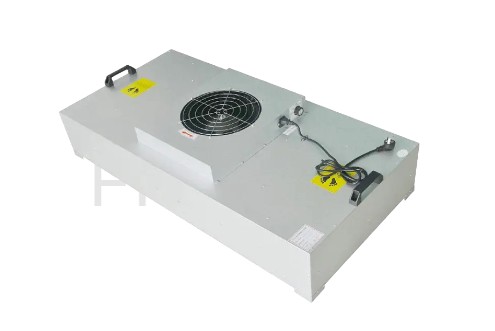
FFU Selection Key Parameters
FFU (Fan Filter Unit) selection requires attention to three core parameters:
- Fan lifespan: Quality direct-drive centrifugal fans can reach over 50,000 hours
- Noise level: Working zone ≤65dB(A)
- Speed regulation range: Stepless speed regulation adapts to different capacity conditions
Semiconductor production lines commonly use FFU full-coverage ceilings to create unidirectional flow, while pharmaceutical Grade C zones can use non-unidirectional flow + local laminar flow hood combinations, reducing FFU procurement by 30%.
Three-Stage Filter Configuration Strategy
Filter configuration follows the "primary + medium + high/ultra-high efficiency" three-stage filtration. A critical misconception is neglecting primary filter dust holding capacity — when capacity is insufficient, medium and high-efficiency filters clog prematurely, causing system resistance to surge and energy consumption to spike. Recommendations:
- Primary: G4 grade panel filters (dust holding capacity ≥500g)
- Medium: F8 grade pocket filters
- Terminal high-efficiency filters (H13-H14 grade) with ≥99.99% efficiency for ≥0.3μm particles
2026 Compliance Updates That Must Be Addressed in Selection
2025-2026 is a period of intensive cleanroom standards updates. Ignoring the following new regulations during selection may lead to acceptance failure or operational non-compliance:
- GB/T 33556.1-2025 (Effective May 1, 2026): Hospital cleanroom application specifications, strengthening negative pressure isolation ward and operating room differential pressure online monitoring requirements
- GB/T 47162-2026 (Effective September 1, 2026): General technical requirements for cleanroom doors, first-time national standard quantitative indicators for door panel airtightness, gasket durability, and observation window anti-condensation
- GB/T 46376-2025 (Effective May 1, 2026): Cleanroom operation and maintenance service standards, requiring full lifecycle O&M records with traceability for filter replacement, differential pressure calibration, and other operations
- GB 50073-2013 2025 Partial Revision: New semiconductor high-grade cleanroom workshop design guidelines, plus energy-saving design and carbon emission control requirements
Selection Decision Checklist: Avoiding Common Pitfalls
Before finalizing the solution, use the following checklist for item-by-item verification:
| Verification Item | Key Question | Risk Level |
|---|---|---|
| Standards Alignment | Does it simultaneously meet GB 50073, ISO 14644-1, and industry-specific standards (GMP/GB 50472)? | High |
| Qualification Planning | Is IQ/OQ/PQ qualification planning and CMA testing resources already planned during the design phase? | High |
| Energy Simulation | Is annual energy consumption simulation provided, and are VFD control and heat recovery technologies incorporated into the design? | Medium |
| Expansion Reserve | Are ductwork, electrical distribution, and control points reserved with over 20% expansion margin? | Medium |
| O&M Handover | Are SOP documents, spare parts lists, and O&M training plans provided? | Medium |
| Data Interface | Does the automatic control system support standard protocols (OPC/Modbus) for easy integration with factory MES? | Low |
Cleanroom system selection is essentially a balance among "process requirements - compliance framework - lifecycle cost." The 2026 trend shows that the crude model of simply pursuing high cleanliness has been eliminated, replaced by precise design based on digital simulation (BIM + CFD airflow simulation), construction modes deeply integrating modularization and intelligence, and full lifecycle compliance management covering design-construction-operation. When selecting, enterprises should prioritize evaluating whether service providers possess cross-standard integration capabilities and industry know-how, rather than merely comparing initial quotations.
How to Choose Panels for Electronic Dust-Free Cleanroom Systems?
When selecting cleanroom panels for an electronic dust-free workshop, the key is not simply choosing the most expensive material. The right choice depends on cleanliness level, humidity conditions, fire resistance, anti-static requirements, and maintenance frequency. For most electronics manufacturing projects, machine-made rock wool panels or magnesium-based panels are practical and reliable choices.
- General electronics assembly workshops: Machine-made rock wool cleanroom panels
- High-cleanliness workshops: Magnesium-based cleanroom panels
- Humid environments: Polyurethane cleanroom panels
- Areas requiring frequent modification: Aluminum honeycomb panels
- ESD-sensitive areas: Panels with anti-static surface treatment
Why Panel Selection Matters in Electronic Cleanrooms
Cleanroom panels are not only wall and ceiling materials. They directly affect air cleanliness, sealing performance, and long-term workshop stability. Electronics production is highly sensitive to dust particles, humidity fluctuation, and static electricity, so poor panel selection may reduce product yield.
- Air leakage through joints lowers cleanliness levels
- Moisture deformation affects door and window sealing
- Dust generation contaminates sensitive components
- Static buildup may damage electronic devices
- Frequent maintenance increases downtime risk
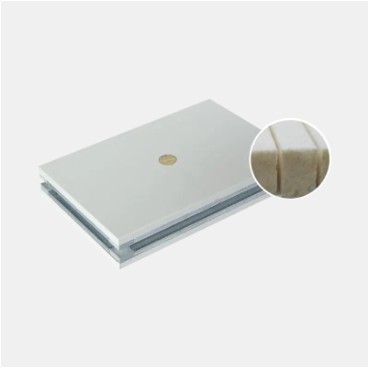
Comparison of Common Cleanroom Panel Types
| Panel Type | Main Features | Best Use |
|---|---|---|
| Machine-made Rock Wool Panel | Fire-resistant, stable structure | General electronics workshops |
| Magnesium-based Panel | High flatness, strong structure | High-cleanliness zones |
| Polyurethane Panel | Moisture resistant, thermal insulation | Humid factories |
| Aluminum Honeycomb Panel | Lightweight, easy to disassemble | Flexible production areas |
Choose Panels by Workshop Type
SMT Production Workshop
Rock wool or magnesium-based panels are recommended for stable structure and fire resistance in equipment-dense environments.
Precision Assembly Workshop
Magnesium-based panels with better flatness help improve sealing performance.
Humid Climate Electronics Factory
Polyurethane panels are suitable due to stronger moisture resistance and insulation performance.
R&D and Testing Areas
Aluminum honeycomb panels are ideal for areas requiring future layout adjustments.
Key Factors to Check Before Purchase
- Steel sheet thickness: Choose structurally stable specifications.
- Core density: Higher density often means better resistance to deformation.
- Fire rating: Prioritize higher fire-resistance grades.
- Air tightness: Joint sealing quality directly affects cleanliness.
- Surface finish: Select according to anti-static or corrosion resistance needs.
How to Balance Budget and Long-Term Performance
A practical approach is premium panels for critical zones and standard panels for support areas.
- Core production zones: High-stability panels
- Corridors and storage: Standard cleanroom panels
- Service spaces: Basic enclosure materials
Installation Quality Determines Final Results
Even excellent panel materials cannot perform well if installation quality is poor. Check the following carefully:
- Uniform and sealed panel joints
- Smooth corner transitions
- Sealed ceiling and air outlet connections
- Flush installation of doors and wall panels
- Reasonable maintenance access openings
Conclusion
When choosing panels for an electronic dust-free cleanroom system, prioritize cleanliness stability > safety > durability > maintenance convenience. For most electronics factories, rock wool and magnesium-based panels are dependable mainstream choices, while polyurethane and aluminum honeycomb panels are better for humid or flexible-use environments.
Which Is More Practical in Low-Cleanliness Workshops: Cleanroom Panels or Cleanroom Windows?
In low-cleanliness workshops (such as ISO Class 8, ISO Class 9, or general controlled production areas), if only one option can be prioritized, cleanroom panels are usually more practical than cleanroom windows. This is because panels cover a larger area and directly determine wall sealing, cleaning efficiency, durability, and environmental stability.
Cleanroom windows are also useful, but in lower-grade cleanrooms they mainly provide lighting, visibility, and local separation. They are usually a management upgrade, while panels are the essential enclosure structure.
- Limited budget: Prioritize cleanroom panels
- Need visibility: Add cleanroom windows
- New construction: Plan panels and windows together
Why Low-Cleanliness Workshops Should Prioritize Cleanroom Panels
Although low-cleanliness workshops have lower standards than advanced cleanrooms, they still require dust control, moisture resistance, and contamination management. As the main wall and ceiling material, cleanroom panels have a more direct impact on the environment.
- Usually cover more than 80% of enclosure surfaces
- Smooth surfaces simplify cleaning and sanitizing
- Sealed joints reduce outside dust infiltration
- Thermal and sound insulation improve workshop stability
- Faster maintenance and easier replacement
The Practical Value of Cleanroom Windows
Cleanroom windows are not unimportant. In lower-grade cleanrooms, they mainly improve visual management and working comfort. They are ideal where observation, daylight, or supervision is needed.
- Monitor production without entering the room
- Improve natural lighting conditions
- Suitable for packaging, inspection, and buffer zones
- Support zoning and workflow supervision
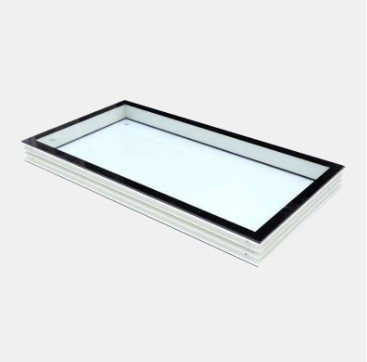
Practical Comparison: Panels vs Windows
| Factor | Cleanroom Panels | Cleanroom Windows |
|---|---|---|
| Coverage Area | Entire walls and ceilings | Local sections only |
| Cleaning Convenience | High | High |
| Sealing Contribution | High | Medium |
| Management Efficiency | Medium | High |
| Priority | Higher | Secondary Option |
Workshops Better Suited to Prioritizing Panels
Food Processing Areas
Walls require frequent washing, making stain and corrosion resistance more important.
Packaging Workshops
Dust control and cleanliness make panels the better priority.
Storage and Buffer Zones
Durable wall systems are usually the most practical solution.
When Cleanroom Windows Are Worth Prioritizing
Inspection and Monitoring Areas
Managers can observe operations without entering the room.
High Traffic Zones
Visibility can reduce unnecessary door openings.
Poorly Lit Workshops
Windows improve natural light and employee comfort.
Recommended Configuration for Low-Cleanliness Workshops
For most low-cleanliness production areas, a practical solution is panels first, windows second:
- Use cleanroom panels for main walls and ceilings
- Install fixed windows at key observation points
- Reduce unnecessary openings for better sealing
- Add more windows later if needed
Conclusion
In low-cleanliness workshops, cleanroom panels are generally more practical than cleanroom windows because they determine basic sealing performance, durability, cleaning efficiency, and environmental stability. Cleanroom windows are best used as a supplement for management and visibility. For long-term practicality, prioritize panels first, then add windows as needed.
Message Feedback
Product Categories
Easily navigate and discover our complete range of solutions through our logically structured product
categories.




- E-Mail: [email protected]
- Tel: +86 18968239620
- Address: Room No.905, He Yuan Mansion, No. 382, Tianda Lane, Ningbo Southern Business District, Yinzhou Ningbo China
Quick Links
Contact Us
© Copyright Zhejiang Kaisier Clean Technology Co.,Ltd.
All Rights Reserved.
 Cleanroom Systems Manufacturer
Modular Cleanroom Solutions Factory
Cleanroom Systems Manufacturer
Modular Cleanroom Solutions Factory
-
+86 18968239620
-
-
