

 en
en
 English
 русский
 Español
 عربى
عربى ไทย
ไทยCleanroom Wall Panels: Types & Selection Guide | Kaisier
2026-08-10 - Last Updated: 2026-08-07
Content
- 1 What Are Cleanroom Wall Panels and Why Do They Matter?
- 2 Main Types of Cleanroom Wall Panels
- 3 Core Material Comparison: Which One Fits Your Project?
- 4 How to Choose Cleanroom Wall Panels: A Practical Framework
- 5 The Complete Wall System: Beyond the Panels
- 6 Conclusion: Partner with a Cleanroom Wall Panel Manufacturer
When you spec a cleanroom project, the walls are the first line of defense against contamination. Yet many buyers discover too late that a cheap panel can compromise the entire air pressure cascade, or that a poorly sealed joint invalidates the cleanroom classification they paid to certify. That is why the decision is never just about finding any panel—it is about finding the right one for your specific ISO class, environmental conditions, and budget. This guide walks through the selection process from a manufacturer's perspective—covering panel types, core materials, and the system components that make the whole enclosure perform.
What Are Cleanroom Wall Panels and Why Do They Matter?
Cleanroom wall panels are prefabricated modular enclosures designed for controlled environments. Unlike drywall or painted block, these panels are engineered to meet three critical requirements: isolating contamination sources, maintaining pressure differentials between zones, and providing an easily cleanable, non-particulating surface. They typically consist of a metal face (usually coated steel or stainless steel) bonded to a structural core, with factory-formed edges that accept aluminum framing and sealing systems.
Because they are precision-fabricated components, these panels directly influence your ability to achieve and maintain a specific air cleanliness level. A properly specified wall system from a complete range of cleanroom wall panels helps you meet the U.S. Federal Standard Class 100 through Class 300,000 equivalencies (consistent with ISO 14644-1 classifications) while simplifying routine decontamination and reducing long-term maintenance costs.
Main Types of Cleanroom Wall Panels
The first decision in selection is the manufacturing process. There are three primary types of panels, each with distinct advantages depending on project scale, surface tolerance requirements, and hygiene criteria.
Handmade Cleanroom Panels
Handmade panels are assembled individually in a factory. This process gives the manufacturer maximum control over surface flatness and dimensional accuracy because each unit can be inspected and adjusted before delivery. These panels work best for projects with custom dimensions, retrofit situations, or when you need a perfectly flush surface for sensitive equipment mounting. Kaisier offers a wide selection of handmade cleanroom panel options with various core materials to match your specifications.
Machinemade Cleanroom Panels
Machinemade panels are produced on automated continuous production lines, which ensures uniform thickness, consistent width, and extremely stable sealing surfaces. They are ideal for large-volume projects that require rapid installation and repeatable quality without the need for custom sizes. If your schedule is tight and your layout is standard, a machinemade cleanroom panel series usually offers the best balance of speed and performance.
Stainless Steel Cleanroom Panels
Stainless steel panels deserve separate consideration because they are a specialized subset. The stainless face (typically 304 or 316 grade) provides superior corrosion resistance against chemical disinfectants and withstands aggressive cleaning agents far better than coated steel. This makes them the standard choice for pharmaceutical filling lines, biotechnology laboratories, and hospital pharmacies where surface integrity is critical. Review the stainless steel cleanroom panel range if your process involves frequent chemical exposure.
Core Material Comparison: Which One Fits Your Project?
Once you settle on a manufacturing method, the next question is core material. The core dictates fire performance, thermal insulation, structural rigidity, and often the cost per square meter. Here is how the common options stack up against specific project drivers:
Rock Wool Core
Rock wool cores are referenced across both handmade and machinemade lines because they deliver dependable fire resistance, good acoustic damping, and stable dimensional behavior. For electronics plants or pharmaceutical warehouses with strict fire codes, this is a safe default. Kaisier offers a fire-rated rock wool manual cleanroom panel for projects that need a proven balance of safety and cost.
Magnesium Oxide (MgO) Core
Magnesium oxide cores shine in humid environments. They resist moisture absorption, inhibit mold growth, and remain stable even when the HVAC system is shut down for maintenance. If your cleanroom is located in a high-humidity climate or you are building a cold room adjacent to an uncontrolled corridor, an MgO core should be on your shortlist.
Polyurethane Core
Polyurethane cores are the lightest and offer the best thermal insulation values. They also create a very rigid composite when sandwiched between steel faces. Use them when you need to control temperature tightly, such as in stability testing rooms or environmental chambers.
Aluminum Honeycomb Core
Aluminum honeycomb is the lightweight structural specialist. It provides outstanding strength-to-weight ratios, which makes it a great fit for ceiling panels and partition walls where you want to reduce the dead load on the overhead steel structure. It is also dimensionally stable under wide temperature swings.
Gypsum and Silicon Rock Cores
Gypsum cores are often blended with rock wool to enhance fire performance without adding excessive weight. Silicon rock core panels offer similar benefits and are frequently selected for cleanrooms that need a balance of cost and fire safety. Both are available in machinemade formats for standardized, cost-sensitive projects.
| Core Material | Primary Advantage | Best For |
|---|---|---|
| Rock Wool | Fire resistance, sound absorption | Electronics, pharma warehouses |
| MgO | Moisture resistance, mold inhibition | Humid climates, cold rooms |
| Polyurethane | Thermal insulation, rigidity | Temperature-controlled chambers |
| Aluminum Honeycomb | Light weight, high strength | Ceilings, lightweight partitions |
| Gypsum / Silicon Rock | Cost-effective fire performance | Standardized, budget-conscious builds |
How to Choose Cleanroom Wall Panels: A Practical Framework
The most effective selection method follows a simple sequence: define your class, assess environmental factors, consider installation constraints, and then balance initial cost against lifecycle expenses. Here is how we recommend you approach it:
Step 1: Define Your Cleanliness Class
What ISO class (or Class 100–300,000 equivalent) does your process require? A Class 100,000 area may tolerate a standard rock wool panel with sealed joints. A Class 1,000 or Class 100 zone will demand stricter panel tolerances and more rigorous sealing details. Match your panel type to the leak-tightness requirements of your target class.
Step 2: Assess Environmental Factors
Will the walls be exposed to constant high humidity? Do you use aggressive chemicals for disinfection, such as hydrogen peroxide vapor or phenolics? If yes, prioritize a stainless steel or MgO panel. If temperature stability is the main goal, move polyurethane up your list.
Step 3: Consider Installation and Sealing
Handmade panels give your contractor flexibility on-site, which is crucial for retrofits or complex geometries. Machinemade panels install faster on straight runs. Also decide on your sealing method: silicone sealant is common and serviceable, while compression gaskets offer better long-term airtightness. The choice affects both the initial schedule and future maintenance access.
Step 4: Balance Budget and Lifecycle Cost
Do not compare only purchase prices. Panels that resist dents, scratches, and corrosion extend the interval between replacements. In a cleanroom, shutting down production to swap a panel has enormous hidden cost. Spending more upfront on stainless steel or a thicker face gauge often pays back over time. For deeper insights, read our complete guide to cleanroom system selection.
The Complete Wall System: Beyond the Panels
A cleanroom wall is a system, not a single component. Selecting the perfect panel and then specifying mismatched aluminum profiles or incompatible doors is a common—and costly—mistake. The entire system must work together to preserve pressure cascades and prevent bypass leakage.
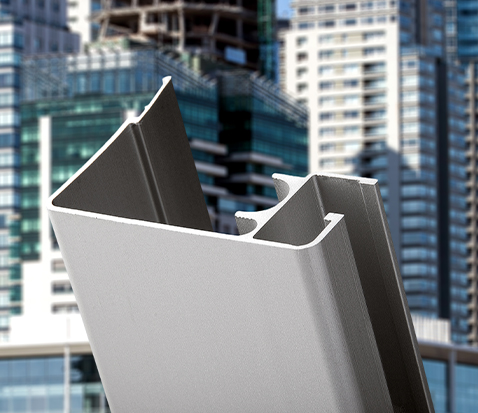
Kaisier provides the full complement of cleanroom aluminum profiles in 50 mm, 75 mm, and 100 mm series, with various cross-sections for corners, transitions, and door frames. Pair these with appropriate cleanroom door systems—available in stainless, steel, or aluminum alloy versions—and gas-tight windows or pass-through chambers to create a complete enclosure. The successful projects we see are almost always the ones where the panel, profile, and seal specifications are developed together rather than in isolation.
Conclusion: Partner with a Cleanroom Wall Panel Manufacturer
Selecting cleanroom wall panels is a high-stakes engineering decision. You need a partner who can support you with a complete product line, consistent manufacturing quality, and dependable delivery for large projects. When you evaluate suppliers, look for demonstrated production capabilities across multiple panel types, a full range of core materials, and an integrated system—profiles, doors, and windows—that removes procurement discrepancies. With four manufacturing bases in China and Thailand, Kaisier offers the supply stability and multilingual support required for international installation timelines. If you are about to specify, contact our technical sales team at our contact page to discuss your project requirements.
Message Feedback
Product Categories
Easily navigate and discover our complete range of solutions through our logically structured product
categories.


- E-Mail: [email protected]
- Tel: +86 18968239620
- Address: Room No.905, He Yuan Mansion, No. 382, Tianda Lane, Ningbo Southern Business District, Yinzhou Ningbo China
Quick Links
Contact Us
© Copyright Zhejiang Kaisier Clean Technology Co.,Ltd.
All Rights Reserved.
 Cleanroom Systems Manufacturer
Modular Cleanroom Solutions Factory
Cleanroom Systems Manufacturer
Modular Cleanroom Solutions Factory
-
+86 18968239620
-
-
