

 en
en
 English
 русский
 Español
 عربى
عربى ไทย
ไทยHow to Select Anti-Rust Stainless Steel Cleanroom Panels?
2026-05-11 - Last Updated: 2026-05-07
Content
- 1 Anti-Corrosion Mechanisms and Grade Differences in Stainless Steel Surface Layers
- 2 How Core Material Selection Impacts Overall Anti-Corrosion and Functional Performance
- 3 Why Manufacturing Process Matters: Manual vs. Machine-Made Panels
- 4 Which Configuration Fits Your Industry: Application-Specific Selection Guide
- 5 How to Prevent Rust During Installation and Maintenance
Cleanroom panels using 304 or 316L stainless steel as the surface layer combined with Class A fire-rated core materials (such as rock wool, glass-magnesium rock wool, or aluminum honeycomb) represent the most reliable anti-corrosion enclosure solution for high-demand clean environments. In neutral salt spray tests, 304 stainless steel typically achieves 48–72 hours without corrosion, while 316L extends this to over 72–120 hours due to its molybdenum content, making it particularly suitable for coastal areas, pharmaceutical facilities, and environments with intensive chemical disinfection. Selection should integrate corrosion grade, fire safety requirements, structural strength, and temperature control needs rather than pursuing a single performance metric.
Anti-Corrosion Mechanisms and Grade Differences in Stainless Steel Surface Layers
The rust-resistant capability of stainless steel cleanroom panels fundamentally derives from the dense chromium oxide passive film formed on the surface. When the chromium content in steel reaches approximately 12%, this passive film effectively blocks oxygen and corrosive media from contacting the substrate. Type 304 stainless steel (06Cr19Ni10) performs excellently in standard cleanroom environments; Type 316L stainless steel (022Cr17Ni12Mo2), with an additional 2%–3% molybdenum, significantly improves its pitting resistance equivalent (PRE=%Cr+3.3×%Mo), offering stronger resistance against chloride-induced crevice corrosion and pitting.
Salt Spray Test Data Comparison
Salt spray testing is a critical accelerated evaluation for stainless steel corrosion resistance. Based on industry-measured data, different materials show significant performance variations under neutral salt spray (NSS, 5% NaCl, 35°C) conditions:
| Stainless Steel Grade | Typical Salt Spray Duration | Applicable Environment Level |
|---|---|---|
| 304 (untreated) | 24–48 hours | General electronics, food workshops |
| 304 (polished/passivated) | 72–96 hours | Pharmaceutical, cosmetic cleanrooms |
| 316 / 316L | 72–120 hours | Coastal, chemical processing, biological labs |
| 316L (passivated) | 200+ hours | Marine platforms, high-salinity industrial environments |
It is important to note that salt spray testing employs extremely high chloride concentrations, with corrosion rates several to tens of times faster than natural environments. Therefore, 304 stainless steel cleanroom panels passing 72-hour salt spray tests can typically guarantee over 10 years of rust-free service in actual low-chloride cleanroom environments, while 316L can achieve an expected lifespan exceeding 15 years under equivalent real-world conditions.
How Core Material Selection Impacts Overall Anti-Corrosion and Functional Performance
While the stainless steel surface layer provides the primary defense, the physical and chemical properties of the core material directly influence the panel's long-term structural integrity and indirect anti-corrosion capability. For example, if the core material absorbs moisture and deforms, panel joints may crack, allowing corrosive media to penetrate the sandwich layer. The following table compares the comprehensive performance of four mainstream core materials:
| Core Material Type | Fire Rating | Thermal Conductivity (W/m·K) |
Structural Strength | Moisture/Anti-Rust Relevance |
|---|---|---|---|---|
| Rock Wool | Class A non-combustible | 0.040–0.045 | Medium | Prone to moisture absorption if edges unsealed; requires moisture-proof treatment |
| Glass-Magnesium Rock Wool Composite | Class A non-combustible | 0.045–0.050 | Very High | Glass-magnesium layer blocks water vapor, reducing internal corrosion risk |
| Aluminum Honeycomb | Class A non-combustible | High (hollow structure) | Extremely High | 100% fiber-free, non-hygroscopic, zero corrosion factor |
| Polyurethane (PU/PIR) | Class B1/B2 fire retardant | 0.022–0.028 | Medium | Closed-cell rate >90%, virtually no water absorption, excellent moisture resistance |
From an anti-corrosion synergy perspective, aluminum honeycomb core material is the preferred choice for high-grade cleanrooms (ISO Class 1–5) due to its electrochemical compatibility with the surface layer, non-hygroscopic nature, and zero fiber shedding. Glass-magnesium rock wool composite core excels in pharmaceutical and chemical applications, where its inorganic properties withstand frequent chemical fumigation without generating corrosive byproducts.
Why Manufacturing Process Matters: Manual vs. Machine-Made Panels
Stainless steel cleanroom panels are categorized by manufacturing process into manual and machine-made types, with critical differences in structural sealing and long-term anti-corrosion performance. Machine-made panels are produced through automated continuous lines for surface bonding, heating, pressing, and curing, achieving extremely high surface flatness (typically ≤1mm/m) and tight joints that effectively prevent water vapor and corrosive media from penetrating the core layer through edges or seams. Manual panels rely on hand assembly; while offering high flexibility for non-standard sizes, consistent sealing at joints is more difficult to guarantee, creating potential water infiltration and corrosion risks in environments with humidity fluctuations.
Process Parameter Comparison
- Machine-made panel adhesive curing temperature: 120°C–150°C constant control, adhesive cure rate >95%, bonding strength ≥0.15MPa
- Manual panel room-temperature curing: dependent on ambient temperature and humidity, longer curing cycle, edges require additional sealant application
- Machine-made panel dimensional precision: length tolerance ±2mm, diagonal tolerance ≤3mm, ensuring installation gaps ≤1mm
For coastal or high-humidity cleanrooms, machine-made panels with 316L stainless steel surfaces are recommended to minimize corrosion probability at joints. If manual panels must be used, all cut edges and joints should be sealed with polyurethane sealant.
Which Configuration Fits Your Industry: Application-Specific Selection Guide
Different industries have varying priorities for anti-corrosion cleanroom panels. Based on practical engineering experience and industry standards, the following targeted selection recommendations are provided:
Pharmaceutical and Biological Laboratories
These environments require frequent spatial fumigation with hydrogen peroxide, formaldehyde, or quaternary ammonium salt disinfectants. 316L stainless steel surface with glass-magnesium rock wool core panels are recommended. 316L resists chlorides and acidic components in disinfectants, while the glass-magnesium layer serves as an inorganic barrier that neither releases harmful gases nor absorbs moisture during chemical fumigation. A pharmaceutical facility case study demonstrated that walls with this configuration showed no pitting or rust spots over 5 years of weekly disinfection cycles.
Electronics and Semiconductor Workshops
Microelectronics manufacturing is extremely sensitive to particulate matter and metal ion leaching. 304 stainless steel surface with aluminum honeycomb core is recommended. The 100% fiber-free nature of aluminum honeycomb eliminates dust sources, and its high flatness (surface variation ≤0.5mm) meets precision FFU airflow requirements. In ISO Class 4 and higher cleanrooms, this combination can control wall particle generation to ≤0.5μm particles <100 per ft³.
Food Processing and Cold Chain Storage
Food facilities must balance anti-corrosion, thermal insulation, and waterproofing. 304 stainless steel surface with polyurethane (PU) core is recommended. PU's thermal conductivity as low as 0.024 W/m·K significantly reduces cold storage energy consumption; its closed-cell structure prevents water vapor penetration, avoiding corrosion on the backside of stainless steel caused by long-term condensation attachment. In thermal cycling tests from -20°C to +50°C, this combination showed no core pulverization or surface delamination.
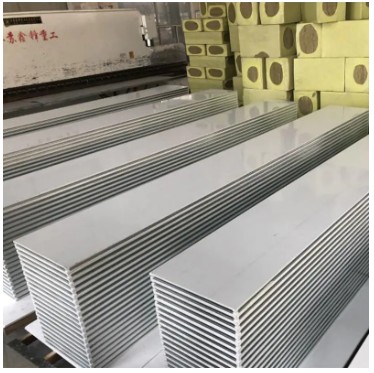
Coastal or Chemical Industrial Plants
High-salinity or acid/alkali vapor environments pose the greatest material challenges. 316L stainless steel surface with aluminum honeycomb core is mandatory, and all installation screws and aluminum angle accessories must also be 316L to prevent galvanic corrosion. Even 316L in such environments requires periodic surface passivation treatment (every 2–3 years) to repair passive films potentially damaged by mechanical scratches.
How to Prevent Rust During Installation and Maintenance
Even with high-performance stainless steel cleanroom panels, improper installation and maintenance can induce premature corrosion. The following are verified critical control points:
- Avoid direct contact between dissimilar metals: Nylon or rubber isolation pads must be used between stainless steel panels and carbon steel framing to prevent galvanic corrosion. Field evidence shows that unisolated carbon steel in contact with 304 stainless steel can produce visible rust migration within 3–6 months in humid environments.
- All cut edges must be sealed: Field cutting creates burrs that destroy the passive film. All cuts should be treated with stainless steel-specific passivation paste and sealed with silicone sealant.
- Select cleaning agents correctly: Avoid chloride-containing cleaners (such as sodium hypochlorite) or hydrochloric acid-based products on stainless steel surfaces. Neutral detergents (pH 6–8) with soft non-woven cloths are recommended.
- Regularly inspect drainage and sealing: The sealant joint between wall baseboards and flooring is a high-risk corrosion zone. Quarterly inspections are recommended; cracked sealant should be repaired promptly to prevent water accumulation in the core layer.
Through these systematic measures, the service life of anti-rust stainless steel cleanroom panels can be extended to 1.5 times the design life, significantly reducing total lifecycle maintenance costs.
Message Feedback
Product Categories
Easily navigate and discover our complete range of solutions through our logically structured product
categories.


- E-Mail: [email protected]
- Tel: +86 18968239620
- Address: Room No.905, He Yuan Mansion, No. 382, Tianda Lane, Ningbo Southern Business District, Yinzhou Ningbo China
Quick Links
Contact Us
© Copyright Zhejiang Kaisier Clean Technology Co.,Ltd.
All Rights Reserved.
 Cleanroom Systems Manufacturer
Modular Cleanroom Solutions Factory
Cleanroom Systems Manufacturer
Modular Cleanroom Solutions Factory
-
+86 18968239620
-
-
