

 en
en
 English
 русский
 Español
 عربى
عربى ไทย
ไทยWhat Are Handmade Cleanroom Panels?
2026-05-04 - Last Updated: 2026-04-28
Content
- 1 Structural Upgrade: Precision Synergy Between Keel Frames and Automated Composite Processes
- 2 Diversified Evolution of Core Materials and Panels: Systematic Matching from Class A Fire Rating to Long-Term Antibacterial Performance
- 3 Connection Systems and Sealing Processes: The Hidden Engineering Evolution of H-Profiles, Zhongzi Aluminum, and Tongue-and-Groove Joints
- 4 Industry Landscape in 2026: The Proliferation of Automated Production Lines and Competition in Full-Chain Service Capabilities
- 5 Full Lifecycle Value: The Leap from Demountable and Reusable Anti-Vibration Structures to Intelligent Cleanroom Assets
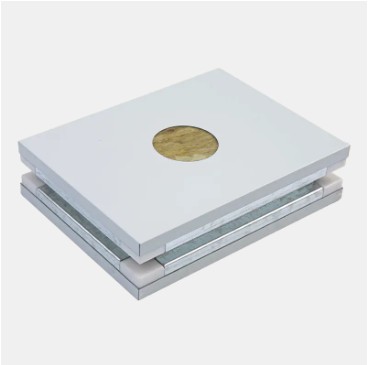
In the cleanroom envelope systems market of 2026, Handmade Cleanroom Panels have completely shed the outdated stereotype of "low-efficiency manual work," transforming into high-end customized products that integrate highly automated production lines with precision manual edge-sealing processes. According to global market data, the cleanroom panel market has surpassed USD 2.07 billion in 2026, continuing to expand at a compound annual growth rate of 11.3%. Among them, handmade cleanroom panels firmly occupy the commanding heights of differentiated competition, relying on their irreplaceability in non-standard customization, disassembly and reuse capabilities, and adaptability to complex working conditions in fields with stringent requirements for airtightness and fire ratings, such as biopharmaceuticals, electronic semiconductors, and food clean workshops. Currently, advanced factories have deployed extremely rare automated handmade cleanroom panel production lines, achieving daily delivery capacities of tens of thousands of square meters while maintaining the precision of manual frame edge-sealing.
Structural Upgrade: Precision Synergy Between Keel Frames and Automated Composite Processes
The fundamental process divergence between handmade and machine-made panels still lies in the peripheral keel frame. Each handmade panel is enclosed by galvanized steel strip keels, aluminum alloy profiles, or plastic-steel keels, forming a closed rigid peripheral protective structure. The core material is filled inside, and the double-sided panels are fixed with high-strength composite processes. In 2026, alongside the deepening of the "space quality revolution" in manufacturing, industry-leading enterprises have deeply integrated this traditional manual process with precision manufacturing. Advanced automated handmade cleanroom panel production lines can maintain the precision of manual frame encapsulation while controlling panel flatness deviation to an extremely low level, ensuring that the panel surface remains free from blistering or cracking over the long term under temperature-humidity fluctuations or alternating positive-negative pressure conditions.
- Multiple Disassembly and Reassembly Capability: The keel serves as the primary load-bearing structure, avoiding direct damage to the core material. High-quality handmade cleanroom panels can withstand 5-8 complete disassembly and off-site reassembly cycles, achieving extremely high asset reuse rates aligned with ESG principles demanding green building materials and solid waste reduction.
- Unrestricted Dimensional Customization: Length can be customized as required, with standard widths covering specifications of 980mm, 1150mm, and 1180mm, and maximum customizable lengths reaching 6,000mm or even longer, minimizing horizontal joints to the greatest extent and meeting the seamless wrapping requirements of irregularly shaped cleanrooms.
Performance Comparison of Mainstream Keel Profiles in 2026
| Keel Material | Structural Strength | Corrosion Resistance | Disassembly Cycles |
|---|---|---|---|
| Galvanized Steel Strip | High | Medium | ≥ 8 cycles |
| Aluminum Alloy | Medium | High | ≥ 5 cycles |
| Plastic-Steel | Low | Extremely High | ≥ 3 cycles |
Diversified Evolution of Core Materials and Panels: Systematic Matching from Class A Fire Rating to Long-Term Antibacterial Performance
In 2026, with GMP, ISO, and ESG standards becoming increasingly stringent, the selection of core materials for handmade panels has shifted from simple thermal insulation to a systematic engineering approach centered on fire protection and microbial control. Silicate mineral wool core materials, leveraging their naturally low particle shedding in molten fiber matrices and Class A non-combustible characteristics, have become a new favorite in high-sensitivity scenarios such as biosafety laboratories and operating rooms. Meanwhile, magnesium oxide, magnesium oxysulfate, and rock wool core materials continue to form the cornerstone of fire safety lifelines and production environment stability.
Regarding panel surfaces, the industry commonly adopts color-coated steel sheets, galvanized steel sheets, stainless steel sheets, or anti-static sheets with thicknesses ranging from 0.426mm to 0.8mm. For highly corrosive operating conditions such as chemical polishing areas, high-grade stainless steel panels paired with magnesium oxysulfate cores can achieve the standard of no rust diffusion in 96-hour salt spray tests. Notably, anti-static handmade panels have their surface resistivity precisely controlled within the range of 10⁶–10⁹Ω, meeting ESD protection standards and perfectly suited for semiconductor and precision electronics cleanroom facilities.
Quick Reference for Typical Core Materials and Application Scenarios in 2026
| Core Material Type | Thickness Range (mm) | Key Advantages & Applicable Scenarios |
|---|---|---|
| Silicate Mineral Wool | 50 - 100 | Class A fire rating, low particle shedding, ideal for biosafety labs |
| Rock Wool | 50 - 200 | Class A fire rating, high sound insulation, top choice for GMP workshops |
| Paper/Aluminum Honeycomb | 50 - 150 | Lightweight and flat, suited for electronic semiconductor clean zones |
| Magnesium Oxysulfate/MgO Hollow | 50 - 100 | Moisture-proof and anti-efflorescence, for high-humidity chemical/food plants |
| Polyurethane/PU | 75 - 200 | Excellent thermal insulation, cold storage and low-temperature cleanrooms |
Connection Systems and Sealing Processes: The Hidden Engineering Evolution of H-Profiles, Zhongzi Aluminum, and Tongue-and-Groove Joints
In 2026, the connection methods for handmade cleanroom panels have formed three major systems: H-type aluminum/H-type steel connections, Zhongzi aluminum connections, and male-female tongue-and-groove connections. Among them, H-profile connections make on-site installation extremely convenient; workers simply insert the handmade panels into the profile grooves one by one and fasten them, achieving a daily per capita installation area of 15-18 square meters. Meanwhile, the tongue-and-groove structure paired with double-seal adhesive technology can achieve micron-level joint tightness, with extremely low leakage rates under 500Pa positive pressure maintenance.
What deserves particular attention is that in 2026, the requirements for the "blind-seal" structure of handmade panels have been further strengthened—the core material is completely wrapped within the keel and panel, eliminating the risk of rock wool fibers or magnesium oxide dust escaping during transportation or long-term use. Industry experts point out that joints must be sealed with specialized sealant, and the installation environment humidity should be controlled below 70% to prevent core materials such as rock wool from absorbing moisture and causing panel deflection deformation. These process details directly determine whether a cleanroom can pass GMP or EU standard dual audits in a single attempt.
Industry Landscape in 2026: The Proliferation of Automated Production Lines and Competition in Full-Chain Service Capabilities
In 2026, the global cleanroom panel market is advancing toward a scale of USD 6.94 billion by 2034 at a compound annual growth rate of 9.66%. In this process, handmade cleanroom panel enterprises have evolved from simple panel processing factories into "guardians of clean spaces." Leading manufacturers not only possess automated production lines with annual capacities exceeding one million square meters but have also built one-stop service systems encompassing "design—production—installation—after-sales."
The latest industry trends indicate that the following capabilities are becoming key benchmarks for measuring the "reliability" of handmade panel enterprises:
- Green and Low-Carbon: Handmade panels made from low-VOC, formaldehyde-free, and recyclable materials are becoming standard, with product solutions achieving approximately 35% reduction in GWP values gaining favor among pharmaceutical giants.
- Intelligent Integration: Future panels may integrate digital interfaces for differential pressure sensing and particle counting, making suppliers' IoT technology integration capabilities increasingly critical.
- Rapid Non-Standard Response: Flexible and agile supply chains enable customized handmade panels to be delivered within extremely short lead times, supporting project acceleration.
Full Lifecycle Value: The Leap from Demountable and Reusable Anti-Vibration Structures to Intelligent Cleanroom Assets
In 2026, the value assessment of handmade panels has expanded from procurement unit price to a comprehensive consideration of full lifecycle cost. In areas with frequent equipment vibrations, when a handmade panel with galvanized steel keels sustains a 500J lateral impact, typically only the single damaged panel needs local replacement, with a repair time of just 20 minutes, significantly reducing downtime losses. In the renovation of aging factory buildings, handmade panels can absorb ±15mm of unevenness deviation on ground ring beam rails, without requiring expensive full epoxy mortar leveling of the original building floor.
- High Reuse Rate: After the pilot production lifecycle ends, over 70% of handmade panels can enter the next production line after cleaning, aligning with green building carbon reduction requirements.
- Sound Insulation and Energy Saving: Thickness adjustable from 50mm to 200mm, paired with high-density rock wool cores, the weighted sound reduction index Rw can exceed 38dB; with thermal conductivity as low as 0.040 W/(m·K), HVAC system energy consumption is reduced by approximately 18%.
- Antibacterial and Cleanliness: Panel antibacterial rate ≥ 99%, combined with tight tongue-and-groove and gasket design, meeting ISO Class 5 to 8 cleanliness standards.
At the ARHC ASEAN Cleanroom Exhibition held in Bangkok in March 2026, next-generation handmade cleanroom panel system solutions were prominently showcased, demonstrating their broad applicability in biopharmaceuticals, medical, and new energy sectors. This industry event confirms that handmade cleanroom panels have stepped from behind the scenes to center stage, anchored by flexible intelligent manufacturing, high-standard fire protection, and intelligent integration, continuously providing reliable physical barriers and long-term value assurance for global advanced manufacturing.
Message Feedback
Product Categories
Easily navigate and discover our complete range of solutions through our logically structured product
categories.



- E-Mail: [email protected]
- Tel: +86 18968239620
- Address: Room No.905, He Yuan Mansion, No. 382, Tianda Lane, Ningbo Southern Business District, Yinzhou Ningbo China
Quick Links
Contact Us
© Copyright Zhejiang Kaisier Clean Technology Co.,Ltd.
All Rights Reserved.
 Cleanroom Systems Manufacturer
Modular Cleanroom Solutions Factory
Cleanroom Systems Manufacturer
Modular Cleanroom Solutions Factory
-
+86 18968239620
-
-
