

 en
 English
 русский
 Español
 عربى
 ไทย
Biosafety Cabinet vs Laminar Flow Hood: Key Differences for Lab Safety
2026-09-14 - Last Updated: 2026-09-14
Content
- 1 The Core Difference: Three Directions of Protection
- 2 Laminar Flow Hood: Product Protection Only
- 3 Biosafety Cabinet: Containment for Operator, Sample, and Room
- 4 Biosafety Cabinet vs Laminar Flow Hood: Side-by-Side Comparison
- 5 Airflow and HEPA Filtration: Why the Exhaust Is Everything
- 6 Decision Sequence: Which One Goes in Your Lab?
- 7 Do Not Spec the Hood in Isolation: Cleanroom Integration
- 8 Frequently Asked Questions
- 9 Final Recommendation
Two labs were built in the same month, in different countries, with the same budget. One installed a vertical laminar flow hood for media preparation; the other installed a Class II biosafety cabinet for clinical sample processing. Both pass their daily particle checks. Swap the two machines, however, and you would have a contamination event within hours, and in the second room, an operator exposure risk.
That is why the question of biosafety cabinet vs laminar flow hood is not a vocabulary exercise. It is a risk-classification decision. The short version: a laminar flow hood protects only the work; a biosafety cabinet protects the work, the operator, and the surrounding room. Everything else in this article is detail supporting that sentence.
The Core Difference: Three Directions of Protection
Every contamination control device can be scored with the same three questions: Does it protect the person? Does it protect the product? Does it protect the environment?
A laminar flow hood answers yes to exactly one: product protection. Air passes through a HEPA filter and then moves in parallel, laminar streams across the work surface. The sample stays clean, but the air spills out of the open front toward the operator. Any particle generated at the work surface, a droplet from a pipette, a shaken tube, or a spilled culture, rides that exhaust stream into the breathing zone.
A biosafety cabinet answers yes to all three. Room air is drawn inward through the front opening, HEPA-filtered air washes down over the work surface, and exhaust air passes through HEPA filters before recirculation or ducting. The front opening behaves like an air curtain: aerosols are captured rather than released. This is not a subtle engineering nuance; it is the difference between exposure and containment.
Protection coverage: laminar flow hood vs Class II biosafety cabinet
Laminar flow hood Biosafety cabinet (Class II)
Laminar Flow Hood: Product Protection Only
A laminar flow hood, also called a clean bench, is a positive-pressure bench that supplies HEPA-filtered air in uniform, parallel streams. The filter bank is mounted either at the rear of the unit, resulting in a horizontal bench where air blows toward the user, or on top, resulting in a vertical bench where air blows down onto the work surface. Both designs share one trait: the air is pushed outward rather than contained.
Where it fits
- Preparing culture media and agar plates
- Aliquoting sterile buffers and reagents
- Non-hazardous pharmaceutical compounding
- Assembly of sterile devices and components
- Electronics and clean-mechanics work
Where it must not be used
- Human blood, body fluids, or patient-derived samples
- Any infectious agent, including bacteria and fungi that generate aerosols
- Volatile chemicals or solvent vapors, because the exhaust has no vapor capture
Procurement note: clean benches cost less and run quieter than biosafety cabinets, and they can pass an airflow-velocity check while being completely unsuitable for biohazard work. Classify the material before you approve the budget.
Biosafety Cabinet: Containment for Operator, Sample, and Room
A biosafety cabinet is a ventilated containment device in which HEPA filters and controlled airflow work together to protect the operator, the product, and the room. The geometry is what separates it from a clean bench: the front opening pulls air inward, the supply plenum sends clean air downward over the work surface, and the exhaust plenum traps particles before air is released.
- Class I: open-front, negative-pressure cabinet; protects the operator and the environment, but not the product. Used for containment procedures where a sterile work surface is not required.
- Class II, Type A2: the most common choice for life-science laboratories; roughly 70 percent of the air is recirculated through HEPA filters and about 30 percent is HEPA-exhausted back into the room. Suitable for BSL-2 and BSL-3 work without volatile chemicals.
- Class II, Type B2: 100 percent of the air is hard-ducted to the outside; used when trace amounts of hazardous chemicals accompany biological work, or when maximum exhaust safety is required.
- Class III: a gas-tight, negatively pressurized glove box with a double-door pass-through; intended for the highest-risk work, typically BSL-4.
Match the cabinet to the biosafety level
Biosafety levels offer a practical shortcut. BSL-1 agents (low-risk microbes) may be handled in a cabinet your institution approves. BSL-2 agents, such as Staphylococcus, clinical E. coli strains, and human blood, require at least a Class II cabinet. BSL-3 agents, including tuberculosis and airborne viruses studied in containment, require a Class II Type B2 or a Class III. BSL-4 pathogens are handled almost exclusively in glove boxes.
Biosafety Cabinet vs Laminar Flow Hood: Side-by-Side Comparison
| Parameter | Laminar flow hood | Biosafety cabinet (Class II) |
|---|---|---|
| Protection provided | Product only | Product, personnel, and environment |
| Front-opening airflow | Outward, toward the operator | Inward, away from the operator |
| Internal pressure | Positive | Negative (containment zone) |
| Exhaust path | Unfiltered, to the room | HEPA-filtered; recirculated (Type A2) or hard-ducted (Type B2) |
| Volatile chemical handling | Not suitable | Not suitable; Type B2 with dedicated ducting covers trace amounts only |
| Certification basis | No biosafety certification standard | NSF/ANSI 49 or EN 12469 |
| Certification cadence | Recommended annual airflow and filter check | Annual, plus after relocation or filter change |
| Typical roles | Media prep, sterile non-hazardous work | Cell culture, clinical microbiology, BSL-2/BSL-3 research |
| Operating cost | Lower | Higher |
Airflow and HEPA Filtration: Why the Exhaust Is Everything
Both devices rely on HEPA filters, so the filter itself is not the differentiator; the airflow design is.
In a clean bench, the air path is simple: supply filter to work surface to open front. HEPA filters of H14 grade capture at least 99.995 percent of particles at the most penetrating particle size, but that clean air is released into the room, unfiltered at the exhaust. If the process generates aerosols, the aerosols leave with the exhaust stream.
In a biosafety cabinet, three air streams are engineered at once: inward airflow through the front aperture at roughly 100 fpm, which prevents aerosols from escaping; downflow of HEPA-filtered air that keeps the work surface clean; and exhaust flow through HEPA filters. The front face velocity is a careful compromise: too low, and containment fails; too high, and turbulence disrupts the sterile field.
Certification is what turns design targets into verified performance. A Class II cabinet is tested to NSF/ANSI 49 or EN 12469, covering downflow velocity, inflow velocity, filter integrity, and aerosol containment. A clean bench has no equivalent standard.
At the room level, the same HEPA supply technology is distributed through fan filter units mounted in the ceiling grid, which deliver filtered air to the entire cleanroom rather than a single bench.
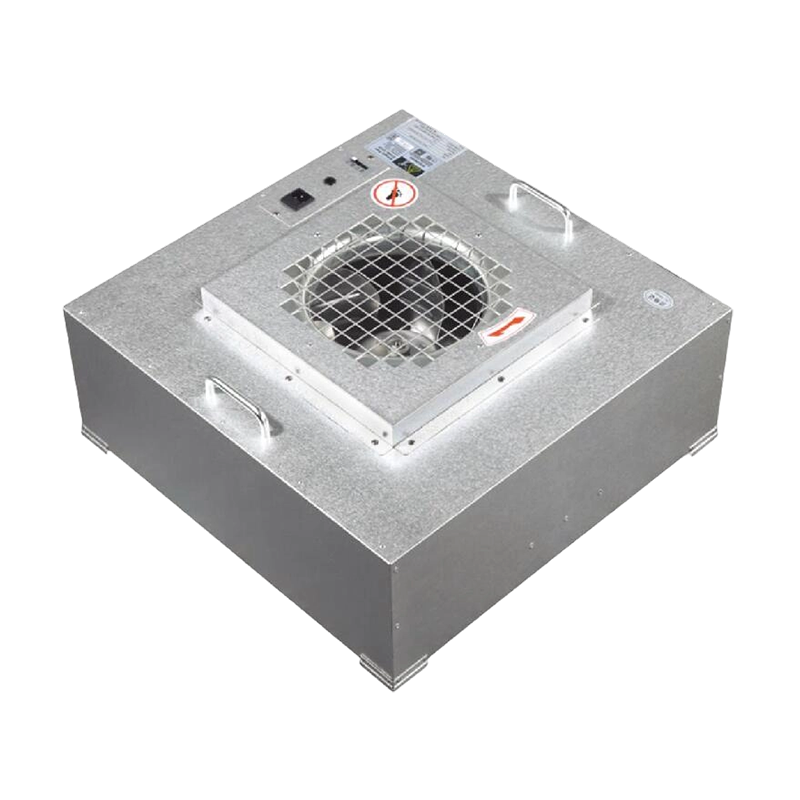 Cleanroom Fan Filter Unit with Long-Life Centrifugal FanThis FFU delivers HEPA-filtered air through ceiling-mounted units for whole-room cleanliness. Its German EBM fan offers over 50,000 hours of operation, low noise, and stepless speed control, making it suitable for modular cleanroom lines and Class 100 assembly.View Product →
Decision Sequence: Which One Goes in Your Lab?
Walk through this sequence with your safety officer before you write a purchase order.
- Classify the material: is it a biohazard (BSL-2 or higher), human-derived, or mixed with volatile chemicals?
- If any biohazard answer is yes, the minimum is a Class II biosafety cabinet.
- If the work is non-hazardous and only product protection matters, a laminar flow hood is defensible.
- If solvent vapors and fumes are present, you need a chemical fume hood, not either device; carbon-filtered cabinets manage only brief traces.
- Match the cabinet type to your exhaust strategy: a recirculating Type A2 for standard microbiological work, or a hard-ducted Type B2 when 100 percent exhaust is required.
Personnel are the dominant variable. In controlled environments, operators generate the majority of airborne particles; published estimates commonly put the figure above 60 percent. That statistic cuts both ways: the operator is the most likely source of product contamination, and the product is the most likely source of operator exposure. A device that protects only the product addresses half the problem.
Typical sources of airborne contamination in a controlled environment
- Personnel — 70%
- Surfaces — 15%
- Air infiltration — 10%
- Equipment — 5%
Do Not Spec the Hood in Isolation: Cleanroom Integration
A hood performs as well as the room around it. A biosafety cabinet with a correct air curtain cannot compensate for a room with leaky walls, the wrong pressure cascade, or unfiltered makeup air. When you specify the installation, four elements need the same attention as the cabinet itself:
- Room envelope: flush, cleanable wall and ceiling panels with sealed joints to keep the controlled volume free of leaks.
- Air supply: ceiling fan filter unit arrays or terminal HEPA supply sized to the cleanliness class, from Class 100 to Class 300,000 depending on the process.
- Pre-filtration: primary filters upstream of the final HEPA stage protect the expensive filter and stabilize airflow.
- Material and personnel movement: pass-through windows, air showers, and interlocking doors that stop cross-contamination between zones.
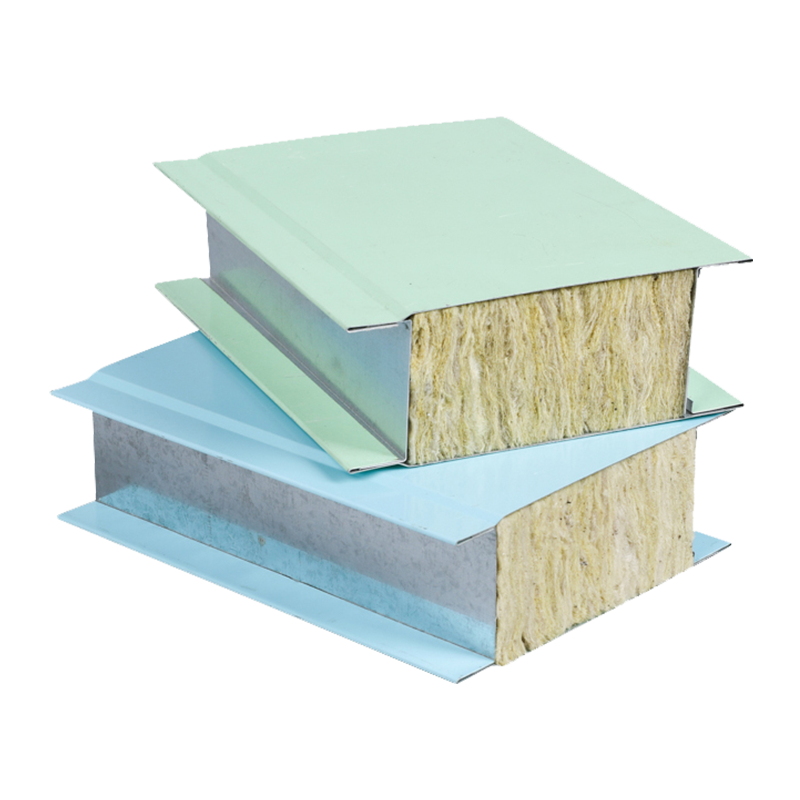 Modular Cleanroom Wall Panels for Contamination ControlThese high-performance panels ensure airtight, smooth surfaces that resist dust and bacteria, with antibacterial and corrosion-resistant properties. Their lightweight, insulated design supports easy installation and maintenance, fitting the room-level integrity needed for proper cabinet performance.View Product →
For a complete walk-through of panel selection, filter stages, doors, and pass-throughs, read our complete guide to cleanroom system selection. The guide covers the components of the controlled room in a single procurement flow.
 Aluminum Frame Primary Filter for HVAC SystemsThis primary filter features low resistance and high airflow, with a long service life. It is widely used in air conditioning systems as the first filtration stage, supporting the cleanroom's overall air quality before finer filtration steps.View Product →
Before first use, create a site-specific certification record: airflow velocity, filter leak test, and room pressure differential. That record becomes the baseline for every future test.
Frequently Asked Questions
Can I use a laminar flow hood instead of a biosafety cabinet for cell culture?
Only for cultures that are verified free of infectious agents, and only with institutional approval. Most biosafety programs require a Class II cabinet for cell culture because cell lines can carry latent viruses and mycoplasma, and routine manipulations generate aerosols.
Does a biosafety cabinet remove chemical fumes?
No. HEPA filters capture particles, not vapors. Work with significant solvent exposure belongs in a chemical fume hood; a hard-ducted Type B2 cabinet handles only trace chemical by-products in biological work.
How often is a biosafety cabinet certified?
At least once per year to NSF/ANSI 49 or EN 12469, and again after relocation, after HEPA filter changes, and whenever the room pressure balance or exhaust configuration changes. Laminar benches also benefit from an annual airflow and filter integrity check, even though no biosafety standard applies.
Which device has lower operating costs?
A laminar flow hood usually has a lower purchase price, cheaper filters, and no mandatory certification program. A Class II cabinet adds HEPA change-outs, annual certification, and possible ducting costs. But choosing the cheaper device for hazardous work usually ends in a failed inspection and a second purchase, which is the most expensive path of all.
Final Recommendation
If the decision comes down to biosafety cabinet vs laminar flow hood, answer one question first: what is at risk? Use a laminar flow hood for non-hazardous product protection; use a Class II biosafety cabinet for anything that could harm an operator. Trust certification, not appearances. The two devices look similar in a sales photo, but their airflow geometry is fundamentally different.
If you are equipping a controlled space and need support on the elements around the hood, including clean panels, FFU supply, pre-filtration, pass-throughs, and door systems, contact our cleanroom engineering team with your application details.
Message Feedback
Product Categories
Easily navigate and discover our complete range of solutions through our logically structured product
categories.



- E-Mail: [email protected]
- Tel: +86 18968239620
- Address: Room No.905, He Yuan Mansion, No. 382, Tianda Lane, Ningbo Southern Business District, Yinzhou Ningbo China
Quick Links
Contact Us
© Copyright Zhejiang Kaisier Clean Technology Co.,Ltd.
All Rights Reserved.
 Cleanroom Systems Manufacturer
Modular Cleanroom Solutions Factory
-
+86 18968239620
-
-
