

 en
en
 English
 русский
 Español
 عربى
عربى ไทย
ไทยFFU Unit Guide: How Fan Filter Units Work, Specs, Sizing and Maintenance
2026-09-07 - Last Updated: 2026-09-07
Content
- 1 What an FFU Unit Is and How It Works
- 2 What an FFU Does Inside a Cleanroom
- 3 Key Specifications to Compare Before You Buy
- 4 AC or EC Motor: Which One Pays Off?
- 5 How Many FFU Units Do You Need?
- 6 Installation Basics: Ceiling Grid, Plenum and Controls
- 7 Maintenance That Protects Your Cleanliness Class
- 8 Frequently Asked Questions
A 300 m² electronics assembly room held at ISO Class 7 typically runs 15 to 20 FFU units around the clock, and over ten years the electricity those motors consume can cost more than the units themselves. That single fact drives most of the decisions in this guide.
An FFU unit - fan filter unit - is a self-powered, ceiling-mounted module that draws air through a washable pre-filter and pushes it through a terminal HEPA or ULPA filter, delivering clean air straight into the room without ductwork. It is the standard supply method for cleanrooms from ISO Class 8 down to Class 5 because it is modular, can be phased in as budgets allow, and is serviced from inside the room.
The short version for buyers: choose an EC motor for 24/7 duty, insist on individually scanned H13 or H14 filters, size the fleet by air change rate rather than guesswork, and budget for pre-filter washing plus eventual HEPA replacement. The numbers behind each choice follow.
What an FFU Unit Is and How It Works
An FFU is a box with a fan in the middle and a HEPA filter at the bottom. The housing drops into a standard ceiling grid, the fan pulls air from the plenum above, and the filter is the last surface the air touches before it enters your room.
Four components do the work:
- Housing: aluminum alloy or zinc-coated steel, typically 1175 × 575 mm, made to sit in a standard 2 × 4 ft T-grid ceiling.
- Pre-filter: a washable G4-grade panel that catches coarse dust and protects the filter behind it.
- Fan and motor: a forward-curved centrifugal blower, usually an EC motor with stepless speed control.
- Terminal filter: HEPA H13 (99.95% efficiency at MPPS) or H14 (99.995%); ULPA U15 (99.9995%) for semiconductor-grade air.
The operating sequence:
- Air is drawn from the ceiling plenum above the unit.
- The pre-filter removes coarse particles that would blind the HEPA media.
- The fan pressurizes the filter box, overcoming roughly 100–130 Pa of resistance on a new filter.
- The HEPA or ULPA panel strips sub-micron particles and discharges uniform, low-turbulence air downward.
Each unit is its own air handler, so cleanliness can be tuned zone by zone: concentrate units over critical process benches, run fewer over storage aisles.
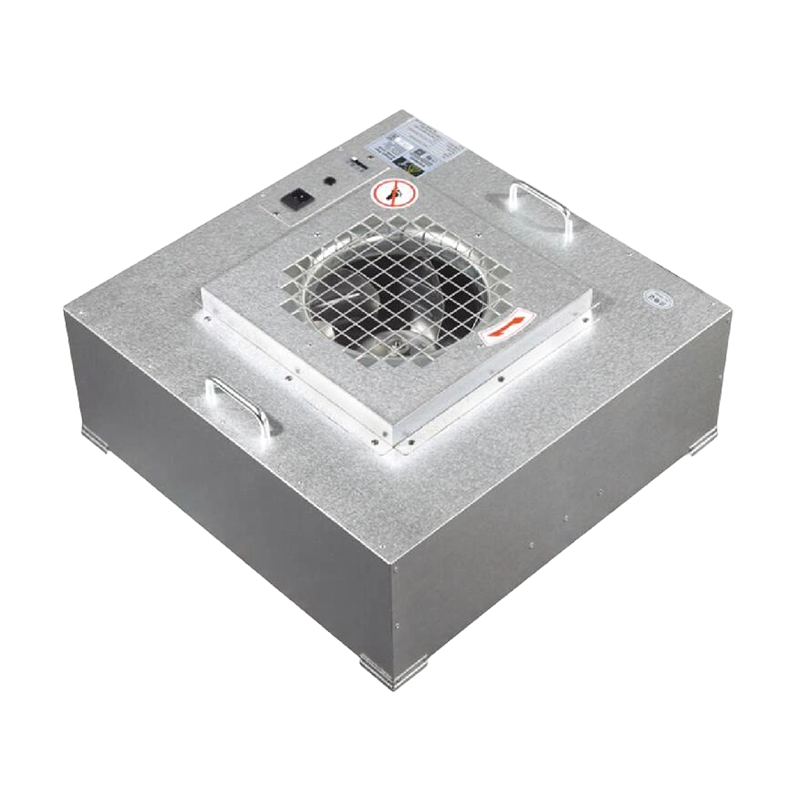 FFU Fan Filter Unit for Cleanroom CeilingsA self-contained air handler with a direct-drive centrifugal fan, stepless speed control, and housing options in stainless steel or coated steel. Well suited here since individual units let operators tune cleanliness zone by zone across the ceiling grid.View Product →
What an FFU Does Inside a Cleanroom
Conclusion first: an FFU ceiling does two jobs - sweeps particles out continuously and holds the room at positive pressure - and for most projects it does both more flexibly than a fully ducted HEPA system.
- Particle control: a continuous curtain of filtered air dilutes and carries away particles from people, equipment and process.
- Pressurization: units supply more air than the room loses, building a pressure cascade across airlocks that keeps corridor air out.
- Modularity: adding ten more units next quarter does not mean redesigning a duct network.
| Aspect | FFU ceiling system | Fully ducted HEPA system |
|---|---|---|
| Initial cost | Lower, no ductwork or large air handler | Higher, with ducting and a deep ceiling void |
| Energy | Low with EC motors, high with old AC units | Efficient large fans, but duct runs add losses |
| Flexibility | Units move with the layout | Fixed once ducting is installed |
| Maintenance | Serviced from inside the room | Needs plenum and duct access |
| Best fit | ISO 5–8, phased builds, retrofits | Very large, stable-layout halls |
Weighing FFUs against panels, doors and air showers? The complete guide to cleanroom system selection on our news hub shows how the pieces fit together.
Key Specifications to Compare Before You Buy
Quotations look alike until you put the numbers side by side. These figures decide performance and lifetime cost:
| Specification | Typical value | Why it matters |
|---|---|---|
| Nominal size | 1175 × 575 × 220–320 mm | Must fit the grid; check clear height above ceiling |
| Airflow | 1,000–1,200 m³/h | Sets unit count; read the fan curve, not peak flow |
| Filter grade | HEPA H13/H14 or ULPA U15 | Each step up adds cost and resistance |
| Motor | EC or AC | EC saves 30–50% energy, allows speed control |
| Noise | 54–62 dB(A) at full speed | Critical in labs and operator-dense rooms |
| Power draw | 100–200 W (EC), 200–350 W (AC) | Multiply by 8,760 hours for the annual bill |
| Housing | Aluminum or zinc-coated steel | Aluminum resists corrosion in humid zones |
Three checks prevent the most common regrets: buy on the fan curve at your real static pressure, not free-blow peak airflow; demand an individual MPPS scan test report for every filter, not a model-level certificate; and confirm spare pre-filters and the group controller are on the delivery list.
AC or EC Motor: Which One Pays Off?
For 24/7 duty - which is nearly every cleanroom - an EC motor repays its higher purchase price within a few years through electricity savings, and it is the only practical way to run group control. AC still suits support rooms that run a few hours a day.
An AC motor is cheap and robust, with speed set coarsely by voltage tapping, so it wastes energy at partial load. An EC motor is a brushless DC machine with integral electronics: 30–50% more efficient at typical duty, stepless from about 30% to 100%, soft-starting, and able to hold constant airflow as the filter loads. A fixed-speed unit instead drifts downward for two years before anyone notices.
Over a ten-year service life, running cost dwarfs the purchase price:
- Energy: 65%
- Filters: 20%
- Labor: 10%
- Purchase: 5%
Illustrative mix for a fleet running 24/7 over ten years; shares vary with electricity prices and duty cycles.
A sensible split: EC everywhere in production zones, AC only where runtime is genuinely short.
How Many FFU Units Do You Need?
Size by air change rate first, then sanity-check coverage: number of units = (room area × ceiling height × target ACH) ÷ airflow per unit.
Worked example: a 100 m² room with a 2.8 m ceiling at ISO Class 7 (about 40 air changes per hour) needs 100 × 2.8 × 40 = 11,200 m³/h - twelve units at 1,000 m³/h each, so order 13 or 14 to keep margin for filter loading.
Common design midpoints; the right figure depends on particle load, heat load and room layout.
ISO classes do not map to a fixed ACH - the chart shows midpoints. Coverage matters as much as volume: about one unit per 2.5–3.5 m² keeps Class 7 airflow uniform. High heat loads need extra airflow directly above them, and the final count should be reviewed with the supplier's engineers before ordering.
Installation Basics: Ceiling Grid, Plenum and Controls
A good unit installed badly never holds its class. Four points decide the outcome:
- A level grid: units sit in a suspended T-grid or hang on threaded rods; a grid out of level by a few millimeters leaks unfiltered air.
- A sealed interface: a gasket or liquid (gel) seal between flange and grid keeps bypass near zero - liquid seal is standard for ISO 5.
- A real return path: air pushed down must get back up through low-level grilles or ducted returns; without one, the room pressurizes until the fans stall.
- Group controls: wire units in balanced groups on a controller that trims speed as filters load, holding airflow constant for years.
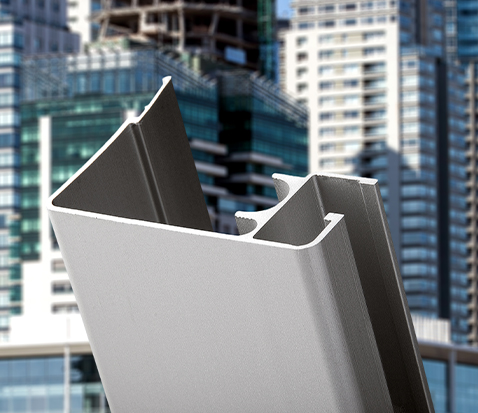
The grid itself is built from cleanroom aluminum profiles - T-bars, hanging beams and trims that keep the ceiling airtight and easy to wipe down.
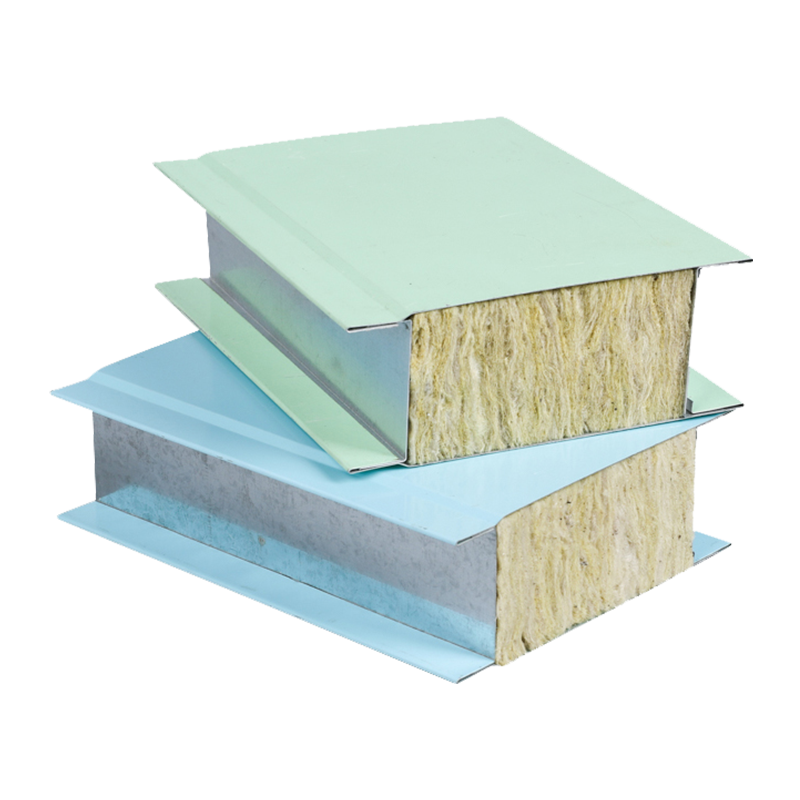 Cleanroom Aluminum Ceiling Profiles and Grid SystemsT-bars, hanging beams, and trims that form an airtight, wipe-down-friendly ceiling grid. A practical component to review here, as the profile system carries the FFUs and keeps the overall ceiling easy to maintain.View Product →
Maintenance That Protects Your Cleanliness Class
Maintenance decides whether a HEPA filter lasts three years or eighteen months. A schedule that works on most sites:
- Monthly: inspect pre-filters, weekly during dusty fit-out phases, and log the pressure drop reading each time.
- Every 1–3 months: wash or replace the pre-filter - the cheapest task in the room and the one that most extends HEPA life.
- Every 6–12 months: verify face velocity (typically 0.35–0.55 m/s) and listen for bearing noise.
- As indicated: replace the HEPA when pressure drop roughly doubles or airflow can no longer hold setpoint, then re-scan the new filter.
Pressure drop rises as media loads; schedule the change as the curve approaches the threshold instead of waiting for airflow to sag.
Keep a spare set of washable primary filters on the shelf - trivial cost next to a day of unplanned downtime.
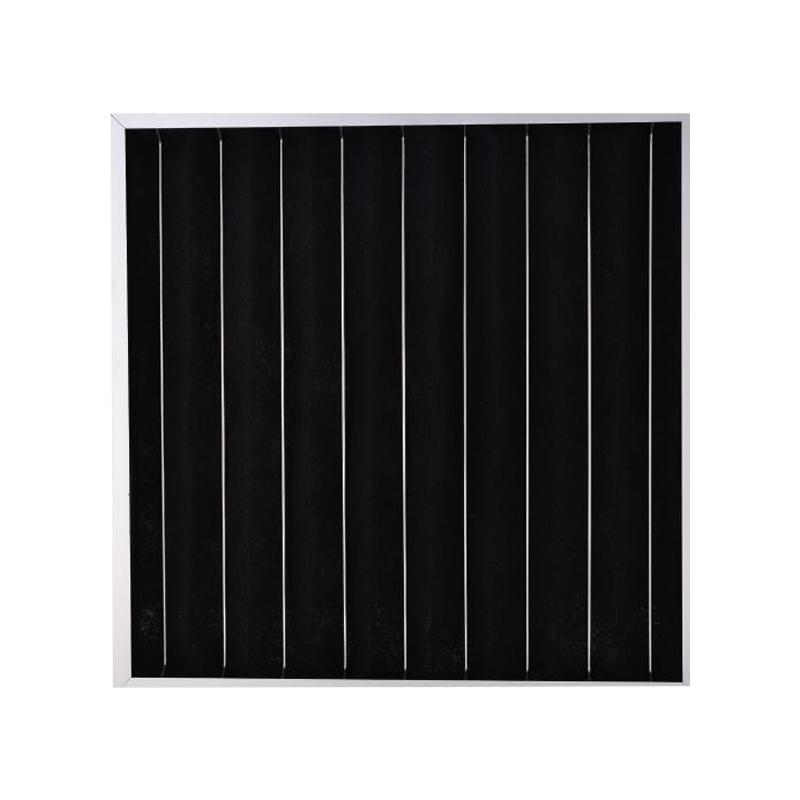 Primary Air Filter for Pre-FiltrationA lightweight, easily installed pre-filter with strong adsorption capacity, used across industrial and commercial settings. It protects downstream HEPA and ULPA stages, extending filter life and reducing unplanned downtime.View Product →
Frequently Asked Questions
What is the difference between HEPA and ULPA filters in an FFU?
HEPA H13 captures at least 99.95% of particles at the most penetrating particle size, H14 reaches 99.995%, and ULPA U15 reaches 99.9995%. Electronics lines often step up to ULPA; medical device and food plants are usually well served by H13 or H14. ULPA costs more and adds resistance, so the fan works harder for the same airflow.
How often do FFU filters need replacing?
Pre-filters are washed every 1–3 months, more often during dusty construction phases. HEPA filters typically last 2–4 years; replace them when pressure drop roughly doubles or the unit can no longer hold its airflow setpoint.
Can FFU speed be adjusted?
Yes, on EC units. Speed can be trimmed per unit or managed centrally by a group controller that holds constant airflow as filters load. AC units offer only coarse, inefficient adjustment.
Can FFUs alone turn an ordinary room into a cleanroom?
No. FFUs supply filtered air, but holding a class also requires sealed wall and ceiling panels, a return air path, airtight doors, and personnel and material airlocks such as an air shower and pass-through window.
An FFU project succeeds on three numbers - the fan curve, the filter grade and the air change target - plus one habit: disciplined pre-filter maintenance.
Kaisier builds FFU units alongside the surrounding cleanroom system - panels, doors, filters and aluminum profiles engineered as one package for medical, electronics and food facilities from Class 100 to Class 300,000, with four production bases across China and Thailand and support running from design to after-sales. For a sizing check or a quotation, share your room area, target class and ceiling height, and the engineering team will run the numbers with you.
Message Feedback
Product Categories
Easily navigate and discover our complete range of solutions through our logically structured product
categories.



- E-Mail: [email protected]
- Tel: +86 18968239620
- Address: Room No.905, He Yuan Mansion, No. 382, Tianda Lane, Ningbo Southern Business District, Yinzhou Ningbo China
Quick Links
Contact Us
© Copyright Zhejiang Kaisier Clean Technology Co.,Ltd.
All Rights Reserved.
 Cleanroom Systems Manufacturer
Modular Cleanroom Solutions Factory
Cleanroom Systems Manufacturer
Modular Cleanroom Solutions Factory
-
+86 18968239620
-
-
