

 en
en
 English
 русский
 Español
 عربى
عربى ไทย
ไทยWhy Machine Made Panels Lead Cleanroom Design?
2026-04-27 - Last Updated: 2026-04-28
Content
- 1 Automated Continuous Production: Redefining Structural Boundaries and Precision
- 2 High-Performance Material Integration: The Evolution from Class A Fire Rating to Long-Term Biosafety
- 3 Engineering Closure for Cleanliness Control: Modular Installation and Positive Pressure Maintenance
- 4 Intelligent IoT Integration: From Passive Barriers to Active Sensing Systems
- 5 Building a Green Asset and Future Sustainability
Amid the surging demand for cleanroom construction in 2026, Machine Made Cleanroom Panels have established themselves as the benchmark for preferred envelope materials in pharmaceutical, semiconductor, and medical facilities, owing to their irreplaceable consistency in large-scale production. According to global market data, the cleanroom panel market size has reached USD 2.07 billion in 2026, expanding rapidly at a compound annual growth rate of 11.3%. The core driver of this growth lies in the industry's ultimate pursuit of contamination control precision, and the machine-made process is the physical foundation for achieving this precision—it transfers human error to intelligent production lines, ensuring that every panel, produced in volumes of millions of square meters annually, possesses fully traceable mechanical properties and chemical stability.
Automated Continuous Production: Redefining Structural Boundaries and Precision
The production of machine made cleanroom panels in 2026 has fully entered a phase of fully digitalized process control. Quality fluctuations found in traditional manual or semi-manual lines—such as high hollow rates caused by uneven adhesive application—have been completely eliminated on advanced automated production lines for PU/rock wool edge-sealed rock wool cleanroom panels. Current mainstream lines utilize intelligent temperature control and CNC forming technology, capable of locking lengthwise errors to ≤±1mm/6m, width errors within ±0.5mm, and panel flatness deviation below 1mm/2m. This extremely high consistency ensures that in turbulent or laminar flow states, the wall panel joints will not form turbulence zones due to level differences, thereby effectively eliminating the hidden accumulation of dust and microorganisms.
Unlike manually glued panels, machine-made panels are formed in a single composite process under high temperature and pressure, pushing the bonding strength between the core material and the steel sheet beyond 0.15MPa. For instance, a leading manufacturer based in Foshan, which has been deeply involved in this field since 2000, is equipped by 2026 with 8 advanced production lines and over 30 auxiliary devices, achieving a maximum daily production capacity of 27,000 square meters and an annual capacity exceeding 4.5 million square meters. This production scale means that even for super-sized semiconductor wafer fabs or biopharmaceutical parks, the delivered cleanroom panels across the same batch can be guaranteed to be completely consistent in color difference (ΔE≤1.0) and conductive performance.
High-Performance Material Integration: The Evolution from Class A Fire Rating to Long-Term Biosafety
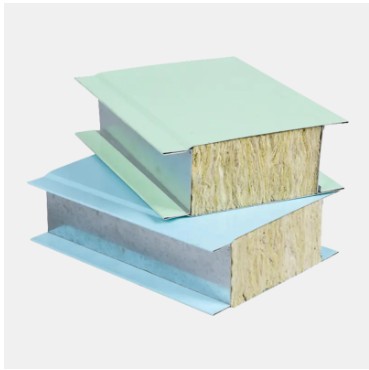
In 2026, stringent fire regulations and GMP/EU GMP Annex 1 standards are driving machine made cleanroom panels towards deep optimization in the field of composite anti-corrosion. The selection for panel surfaces is no longer limited to ordinary color-coated steel sheets; stainless steel and specific antibacterial coating materials with greater corrosion resistance have become the top choices for medical and biosafety laboratories.
Performance and Application Matching of Mainstream Machine Made Panel Core Materials
| Core Technical Feature | Rock Wool/MgO-Rock Wool | Magnesium Oxysulfate | Aluminum Honeycomb/PIR |
|---|---|---|---|
| Fire Rating | Class A1 Non-combustible | Class A1 Non-combustible | Class B1/B2 |
| Thermal Conductivity W/(m·K) | 0.037 - 0.044 | ≤ 0.038 | 0.022 - 0.073 |
| Key Applicability | High fire-safety GMP workshops | High-humidity clean zones | Anti-static/Semiconductor ISO3-5 |
Especially in food processing or fine chemical workshops susceptible to moisture erosion, magnesium oxysulfate cores, with their low water absorption and non-efflorescence properties, combined with the machine-made steel sheet facing, can maintain a corrosion-free deformation lifespan of over 20 years. In static-sensitive chip manufacturing plants, aluminum honeycomb composite machine-made panels, with their high flatness and non-particle-shedding characteristics, have become the standard configuration for maintaining ISO Class 3 to 5 cleanliness levels.
Engineering Closure for Cleanliness Control: Modular Installation and Positive Pressure Maintenance
Engineering practices in 2026 demonstrate that the contribution of machine made cleanroom panels to maintaining the integrity of clean spaces extends from being simple walls to systematic aerodynamic adaptation. Compared to traditional on-site welding or masonry methods, the new generation cleanroom panel systems showcased at the 2026 ARHC exhibition in Bangkok commonly adopt modular quick-install structures.
- Deformation-Resistant Structure: In positive pressure clean zones maintaining 25-50 air changes per hour, the machine-made tongue-and-groove panel design offers extremely high airtightness. Under 500Pa pressure, the leakage rate per square meter is extremely low, and with sealant injection, joint tightness reaches ≤0.5mm, effectively isolating unfiltered cross-contamination airflow.
- Zero On-Site Dust Output: Since machine-made panels are precisely cut and edge-sealed at the factory, on-site assembly requires only bolting. The average daily per capita installation area in 2026 has generally risen to 20-25 square meters, an efficiency increase of over 50% compared to traditional manual construction.
This construction method eliminates the particulate matter generated by cutting rock wool or sanding putty on-site, achieving a natural synergy between the construction process and cleanliness management standards.
Intelligent IoT Integration: From Passive Barriers to Active Sensing Systems
In 2026, cleanroom envelope systems are undergoing a leap from being purely physical barriers to becoming active environmental control terminals. Due to their high-precision reserved insert capabilities, machine made cleanroom panels have become the optimal carriers for IoT sensors and intelligent control systems. Industry reports predict that the market for cleanroom panels integrated with smart monitoring systems is growing rapidly, with major companies having developed integrated cleanroom panel systems capable of embedding differential pressure sensors, particle counters, and environmental monitoring modules directly inside the panels.
After implementing IoT-integrated wall panels, a major international pharmaceutical company not only achieved single-screen control of temperature, humidity, and pressure parameters across 12 independent cleanrooms and 120 FFUs, but also realized a 20% reduction in contamination incidents and a 15% drop in HVAC system energy consumption within the first year. In September 2025, the North American market also saw a trend of substantial investment in large-scale automated cleanboard production lines, aiming to shorten delivery lead times to meet the surging demand for customized smart cleanrooms.
Building a Green Asset and Future Sustainability
Driven by global trade tariff changes and "carbon neutrality" goals, downstream clients in 2026 have put forward explicit quantitative metrics for the recyclability and low carbon footprint of machine made cleanroom panels. The trend towards engineering customization is clear: machine-made rock wool panels with optimized high-performance thermal insulation parameters have enabled large pharmaceutical factories to reduce their annual carbon dioxide emissions by about 35% in Global Warming Potential (GWP).
- Full Lifecycle Value: The modular disassembly and off-site reassembly reuse rate of machine-made wall panels has now reached over 80%, drastically cutting solid waste landfill costs during production line iterations.
- Long-Term Energy-Saving Benefits: In bio-cleanrooms operating over 8,000 hours annually, a thermal conductivity as low as 0.044 W/(m·K) can directly reduce the cooling/heating load lost through wall conduction by about 18%, nearly halving the investment payback period compared to 2019 levels.
These data points strongly validate that choosing advanced machine made cleanroom panels is not only a direct measure to safeguard core production process safety, but also a long-term strategy aligned with the top-level design of future green factories and intelligent Industry 4.0.
Message Feedback
Product Categories
Easily navigate and discover our complete range of solutions through our logically structured product
categories.


- E-Mail: [email protected]
- Tel: +86 18968239620
- Address: Room No.905, He Yuan Mansion, No. 382, Tianda Lane, Ningbo Southern Business District, Yinzhou Ningbo China
Quick Links
Contact Us
© Copyright Zhejiang Kaisier Clean Technology Co.,Ltd.
All Rights Reserved.
 Cleanroom Systems Manufacturer
Modular Cleanroom Solutions Factory
Cleanroom Systems Manufacturer
Modular Cleanroom Solutions Factory
-
+86 18968239620
-
-
