

 en
en
 English
 русский
 Español
 عربى
عربى ไทย
ไทยWhat are Temporary Building Systems?
2026-04-22 - Last Updated: 2026-04-23
Content
- 1 How to choose the right portable temporary container house based on project cycle and geography?
- 2 Prefabricated vs. portable temporary container house: Which is better for fast deployment?
- 3 From emergency housing to campsites: Space expansion solutions for portable temporary container houses
- 4 Why portable temporary container houses are the top choice for site offices and temporary warehouses?
How to choose the right portable temporary container house based on project cycle and geography?
When selecting a portable temporary container house, the direct criterion for success lies in: The length of the project cycle determines the choice of architectural form (mobile vs. modular), while the geographical environment dictates the physical specifications of the materials. For short-term projects requiring high-frequency mobility, mobile homes are the preferred choice. For projects in harsh environments seeking long-term stability, modular housing or prefabricated houses offer superior earthquake resistance, insulation, and spatial configuration capabilities.
Phase 1: Determining Structural Type Based on Project Duration
The project cycle directly impacts ROI and disassembly costs. Referring to industry standards, we can categorize products into the following three types:
Short-term Projects (< 1 Year): Mobile Homes
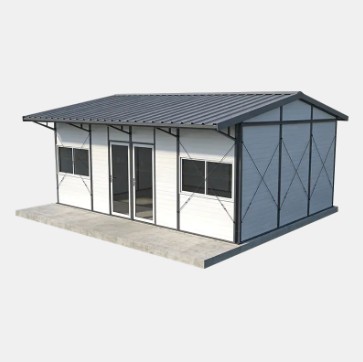
Mobile homes utilize light steel frames and sandwich panels for exterior walls. Their greatest advantage is rapid assembly and disassembly. These products are highly standardized, making them ideal for construction site dormitories, offices, or temporary warehouses. Their high reuse rate allows them to be relocated as a whole to the next site immediately after a project ends.
Mid-to-Long-term Projects (1-5 Years): Prefabricated Houses
Prefabricated houses are based on integrated design and assembly-line production, where component processing and MEP (mechanical, electrical, plumbing) pre-installation are completed simultaneously at the factory. Compared to simple mobile homes, they emphasize structural stability and spatial flexibility, suitable for hotels, office buildings, or semi-permanent resettlement housing, significantly reducing construction waste and lead times.
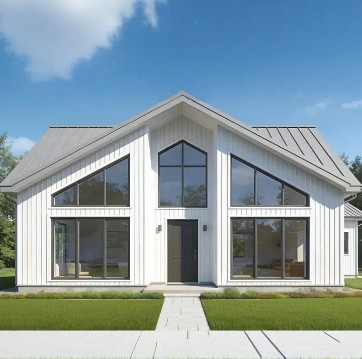
Long-term or Permanent Needs: Modular Housing
Modular housing is a state-of-the-art prefabricated system. Since interior decoration and equipment integration are finished at the factory, it offers excellent earthquake resistance, fireproofing, soundproofing, and thermal insulation. This form is suitable for high-quality apartments or campsite dormitories, providing a living experience close to traditional buildings while remaining cost-controllable and transportable for reuse.
Phase 2: Hardware Requirements for Geographical Environments
Geographical conditions determine the "defensive attributes" a house must possess. The following table highlights configuration priorities for various environments:
| Environment | Core Performance Need | Recommended Material/Tech |
|---|---|---|
| Arctic / High Altitude | Insulation & Energy Saving | 100mm Polyurethane (PU) Sandwich Panels |
| Coastal / Hurricane Zones | Wind Resistance & Anti-corrosion | Reinforced Cold-formed Steel + Anti-corrosion Coating |
| Seismic-prone Areas | Overall Structural Integrity | Fully Welded Modular Frame with Flexible Connections |
| Rainy / Humid Regions | Rapid Drainage & Moisture-proof | Internal Drainage System, Rockwool Moisture-proof Panels |
Phase 3: Practical Configuration and Maintenance
After determining the base structure, optimize for specific application scenarios:
- Emergency Relief Scenarios: Focus on delivery speed. Choose factory-prefinished mobile homes to ensure "ready-to-use" capability within hours of arrival.
- Spatial Expansion Needs: Modular houses support horizontal combination and vertical stacking, allowing dynamic expansion of office or living areas based on project scale.
- Eco-friendliness & Sustainability: Prefabricated buildings significantly reduce on-site construction waste. Once a project concludes, these structures can be 100% disassembled or relocated as a whole.
Expert Tip: When used in extreme geographical conditions, be sure to check roof drainage clearance and foundation stability every six months. This can effectively extend the house's service life to over 15 years.
Prefabricated vs. portable temporary container house: Which is better for fast deployment?
When extreme speed is the priority, portable temporary container houses (mobile homes) are the definitive winner due to their "drop-and-use" capability via integrated hoisting. However, if the project requires a balance of rapid deployment with superior long-term stability and aesthetics, prefabricated houses (modular housing) are the better choice. In short: Choose container houses for urgent emergencies; choose prefabricated houses for planned rapid construction.
Deep Dive: Architectural Forms and Technical Characteristics
Based on the technical data of modular and mobile structures, these two solutions exhibit distinct advantages in industrial production and on-site delivery:
Portable Temporary Container Houses: Standardization and Mobility
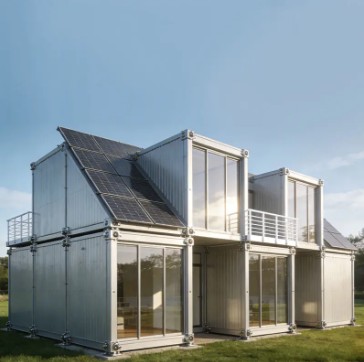
These structures typically utilize light steel frames and sandwich panels. Their primary design philosophy is "flexibility." The most significant feature is high integration, where electrical and plumbing systems are pre-installed at the factory. For construction site dormitories or temporary offices, the house can be positioned quickly by crane upon arrival. This "dry assembly" mode generates zero construction waste, and deploying a standard unit (approx. 18 sq.m.) usually takes only 30-50 minutes.
Prefabricated / Modular Housing: Industrial Systems and Durability
Prefabricated houses trend toward integrated design and assembly-line production. Beyond the shell, they include deeply prefabricated interior, kitchen, and bathroom modules. While on-site assembly may take several days for structural connections and joint sealing, they provide superior seismic, thermal, and acoustic performance compared to basic container houses. Their modern design makes them ideal for high-standard camps or semi-permanent living spaces.
Deployment Efficiency and Performance Comparison
The following table analyzes core metrics to help you weigh the pros and cons in practical applications:
| Metric | Portable Temporary Container House | Prefabricated / Modular House |
|---|---|---|
| Construction Cycle | Hours (Instant hoisting) | Days (On-site modular assembly) |
| Reuse Rate | Extremely High (Relocatable as a whole) | High (Disassemble and rebuild) |
| Environmental Resistance | Good (Basic wind/rain/heat protection) | Excellent (Fireproof, Seismic, High Insulation) |
| Spatial Flexibility | Fixed unit modules | High Freedom (Supports custom spans) |
Selection Logic for Typical Application Scenarios
To ensure the scientific validity of your plan, customize based on the specific needs of the environment:
- Emergency Resettlement & Disaster Relief: Priority must be given to portable temporary container houses. In areas with limited power or transport, these can provide large-scale shelter with minimal technical barriers. For example, a camp with hundreds of beds can be established within 24 hours.
- Construction Site Offices & Temporary Warehouses: Mobile homes are recommended. Their core advantage is a high turnover rate and low maintenance cost, allowing for zero-loss asset rotation as projects conclude.
- Temporary Hotels, Schools, or Apartments: Prefabricated modular housing is suggested. The insulation and soundproofing are better suited for long-term psychological comfort and professional branding.
Deployment Quality Control and Maintenance
Fast deployment does not mean sacrificing quality. These measures can extend service life to 15-20 years:
- Joint Sealing Reinforcement: For assembled prefab houses, inspect external panel joints every two years to ensure sealant integrity and prevent frame corrosion.
- Leveling Monitoring: Temporary houses have low foundation requirements, but leveling at the four corners should be checked periodically in soft-soil areas to prevent door/window misalignment.
- Integrated MEP Maintenance: Since plumbing and electrics are pre-installed, perform insulation testing on main circuits after frequent relocations or assembly to ensure safety.
Expert Summary: Portable temporary container houses are the vanguard of "zero-lead-time" delivery, while prefabricated houses are the pillar for high-standard, scalable life facilities. Your choice should always balance "Mobility Frequency," "Living Comfort," and "Environmental Extremes."
From emergency housing to campsites: Space expansion solutions for portable temporary container houses
The core value of portable temporary container houses lies in their high physical flexibility and modular expansion capabilities. By utilizing horizontal splicing, vertical stacking, and adjustable internal partitions, a single unit can rapidly expand from a basic 18-square-meter independent cell into a comprehensive building complex covering thousands of square meters. This approach not only meets the need for ultra-fast resettlement in the early stages of a disaster but also evolves into a modern field camp with fully functional zones through spatial optimization.
Core Technical Methods for Spatial Expansion
Based on technical specifications for modular structures, expansion is primarily achieved through three distinct methods:
Horizontal Infinite Connectivity
By removing the long-side panels of the container houses and using specialized waterproof sealing connectors, multiple units can be combined horizontally. This method is frequently used to create open office halls, dining canteens, or temporary warehouses, breaking the narrow feel of single units.
Vertical Double-Stacking Solutions
Utilizing the load-bearing characteristics of reinforced light steel frames, portable container houses support vertical stacking of two or even three floors. Integrated with external or internal stairs and corridors, this doubles the floor area within a limited footprint—ideal for construction site dormitories with restricted space.
Functional Internal Segmentation
Based on prefabricated production, internal partition walls can be added flexibly. A single standard unit can be divided into two dormitory units with independent bathrooms, achieving a rapid upgrade from "group resettlement" to "private living."
Spatial Configuration Models by Scenario
Spatial solutions vary significantly based on the urgency and functional requirements of the application scenario:
| Application Scenario | Primary Functional Need | Recommended Expansion Plan |
|---|---|---|
| Emergency Resettlement | Ultra-fast Deployment, Basic Shelter | Independent unit alignment, focus on standardized delivery |
| Remote Mining Camp | Integrated Living, Recreation, Medical | "Modular Clusters", including multi-unit canteens and clinics |
| Site Project Office | Meetings, Admin, Showrooms | Double-stacked, ground floor for work, top floor for living/balcony |
Key Factors for Practical Expansion Plans
When implementing large-scale spatial expansion, attention to engineering details ensures a constructive outcome:
- Structural Sealing: Connection points are vulnerable to leaks; use EPDM rubber seals and custom waterproof flashing to ensure zero leakage in heavy rain.
- Electromechanical Integration: High-quality plans include modular power and data interfaces at the factory level, allowing rapid series connection once units are joined.
- Climatic Adaptation: In extreme climates, adding an integrated secondary roof insulation layer can effectively reduce internal energy consumption by approximately 30%.
Summary: Defining the Future of Temporary Architecture
From single-unit emergency housing to complex remote "camp cities," portable container houses prove that buildings can grow dynamically like building blocks. By using factory prefabrication, these solutions minimize site pollution and maximize sustainability through reuse. When selecting an expansion plan, users should prioritize wind and seismic ratings and assembly speed to ensure a safe, comfortable community in any geographical setting.
Why portable temporary container houses are the top choice for site offices and temporary warehouses?
Portable temporary container houses have become the top choice for modern construction sites because they solve the most critical pain points: ultra-fast deployment and high asset turnover. Unlike traditional temporary buildings, container houses are 100% factory-prefabricated, ready for use within hours of arrival. Their low-loss, high-efficiency nature—allowing for total relocation after project completion—makes them irreplaceable for office and warehouse applications.
Quality and Safety Through Industrial Production
Construction environments are complex, demanding strict structural integrity for office and storage spaces. Portable container houses provide a solid guarantee through advanced manufacturing:
Stable Steel Frame Structure
Using high-strength cold-formed thin-walled steel frames, these structures undergo professional mechanical calculations to achieve excellent wind resistance (usually up to level 10+) and seismic performance. This is vital for protecting expensive equipment, precise blueprints, and the safety of personnel.
High-Performance Enclosure Materials
Walls typically use Rockwool or Polyurethane (PU) sandwich panels. These materials provide superior sound insulation (keeping construction noise out of the office), excellent fire resistance, and thermal insulation that significantly reduces energy consumption for HVAC systems.
Functional Advantages: Office vs. Warehouse Scenarios
In different on-site applications, portable container houses demonstrate exceptional adaptability:
| Requirement | Site Office Application | Temporary Warehouse Application |
|---|---|---|
| Interior Environment | Pre-installed utilities & AC ports; comfortable | Open space with heavy-duty floor design |
| Security | Soundproof & fireproof; ensures privacy | All-steel shell; strong anti-theft & moisture-proof |
| Scalability | Modular splicing for conference rooms | Vertical stacking to save site footprint |
Economic Efficiency: Long-term Asset Reuse
In the long run, portable container houses offer high cost-effectiveness through residual value preservation and low relocation costs:
- Zero-Loss Migration: Offices can be hoisted as a whole to new sites. Statistics show a reuse rate of over 95%, compared to 30%-50% loss for traditional prefab board houses.
- Simple Foundation: Only basic ground hardening or prefab piles are required, reducing time and capital investment in civil engineering.
- Low Maintenance: Galvanized powder-coated frames and color-steel panels offer strong corrosion resistance, with a service life of 15-20 years under normal maintenance.
Sustainability and Green Site Standards
As global requirements for green construction rise, portable container houses align with sustainable development trends:
- Eco-friendly Construction: Utilizes bolt connections and hoisting with no wet work, no dust pollution, and no construction waste on-site.
- Recyclable Materials: The steel main body can be 100% recycled at the end of its life, meeting low-carbon goals.
- Professional Image: Exterior colors and appearances can be customized according to the project's VI system, enhancing the professional brand of the site.
Summary: With excellent structural safety, rapid relocation capability, and outstanding spatial flexibility, portable temporary container houses have become the most productive hardware choice for the construction industry to improve management and reduce operational risks.
Message Feedback
Product Categories
Easily navigate and discover our complete range of solutions through our logically structured product
categories.


- E-Mail: [email protected]
- Tel: +86 18968239620
- Address: Room No.905, He Yuan Mansion, No. 382, Tianda Lane, Ningbo Southern Business District, Yinzhou Ningbo China
Quick Links
Contact Us
© Copyright Zhejiang Kaisier Clean Technology Co.,Ltd.
All Rights Reserved.
 Cleanroom Systems Manufacturer
Modular Cleanroom Solutions Factory
Cleanroom Systems Manufacturer
Modular Cleanroom Solutions Factory
-
+86 18968239620
-
-
