

 en
en
 English
 русский
 Español
 عربى
عربى ไทย
ไทยWhat Is a Cleanroom Air Filter?
2026-07-20 - Last Updated: 2026-07-20
Content
- 1 Filter Grades and Where Each One Belongs
- 2 How the Filter Works Inside an FFU Fan Filter Unit
- 3 Related Cleanroom Filtration Products
- 4 Four Signals That Say a Filter Needs Replacing
- 5 Sizing and Seal Compatibility With the Existing Housing
- 6 Ten-Step Installation Sequence
- 7 Acceptance Checks After Replacement
- 8 Where Cleanroom Air Filters Get Used
- 9 Five Checks Before Buying Replacement Filters
A cleanroom air filter is a component that captures airborne particles, fibers, and microorganisms from air passing through a Fan Filter Unit or air handling system, keeping the cleanroom at its required ISO cleanliness class. Most cleanroom air filters use HEPA or ULPA glass fiber media rated at 99.97 percent to 99.9995 percent efficiency at 0.3 micron. A filter should be replaced once resistance climbs to 1.5 to 2 times its initial value, once a PAO leak scan shows penetration above the rated limit, or once it passes the 3 to 5 year service life typical for H13 and H14 grades. Swapping in a correctly matched replacement filter restores particle control, can cut fan energy use by 20 to 30 percent, and prevents contamination events tied to filter failure.
Cleanroom air filters sit at the center of every FFU Unit, ceiling grid, and modular cleanroom panel enclosure. Because they are consumable parts, facility teams need a clear framework for grading, sizing, installing, and testing them rather than treating replacement as guesswork. The sections below walk through that framework, from filter grade selection to acceptance testing after a swap.
Filter Grades and Where Each One Belongs
Cleanroom Systems are only as clean as the weakest filter grade installed in them. Matching filter efficiency to the target ISO class avoids both under-filtration and unnecessary cost from over-specifying media.
| ISO Class | Recommended Grade | Efficiency at 0.3um | Typical Application |
| ISO 7-8 | H13 | 99.97% | General electronics, packaging, food handling |
| ISO 6 | H14 | 99.995% | Pharmaceutical Cleanroom Systems, injection rooms |
| ISO 5 | H14 or U15 | 99.995% - 99.9995% | Semiconductor packaging, Laboratory Cleanroom Panels areas |
| ISO 4-5 (advanced) | U15 / U17 | 99.9995% - 99.999995% | Wafer fabrication, precision optics |
A Cleanroom High Efficiency Filter is normally paired with a Fan Filter Unit rather than run inside a central AHU alone, since the FFU distributes filtered air directly at ceiling level and shortens the duct run that could reintroduce particles.
How the Filter Works Inside an FFU Fan Filter Unit
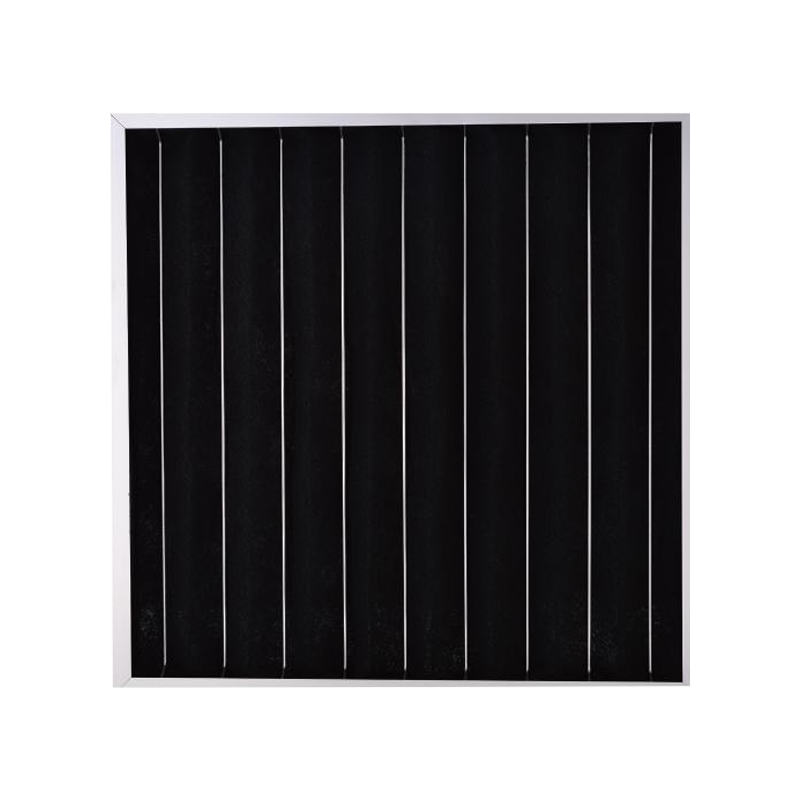
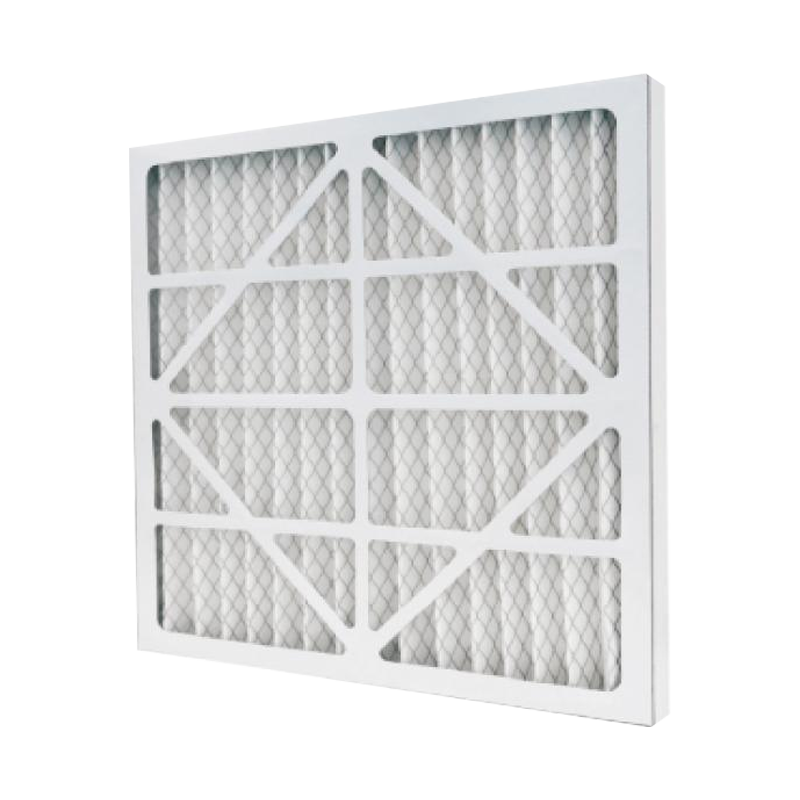
An FFU Filter Unit pulls room air or plenum air through a pre-filter stage, then pushes it through the HEPA or ULPA media before releasing it downward in a laminar pattern. The pleated media inside a Cleanroom Air Filter increases surface area, which lowers face velocity across the fabric and extends dust-holding capacity before resistance climbs. A Modular FFU Unit typically uses a mini-pleat pack with aluminum or hot-melt separators, sealed to the frame with polyurethane or gel-based sealant so no air can bypass the media at the frame joint.
Three structural details decide how long a filter lasts in service:
- Pleat depth and count, which set the effective filtration area
- Separator material, where aluminum separators handle humid or corrosive air better than paper
- Frame flatness, since a warped frame breaks the seal and lets unfiltered air pass around the media
Related Cleanroom Filtration Products
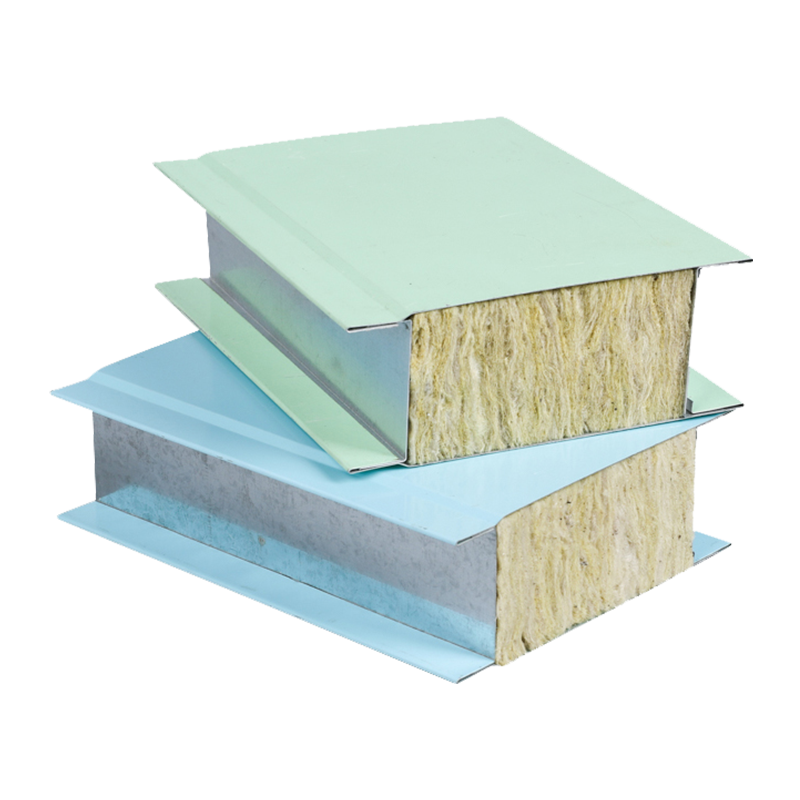
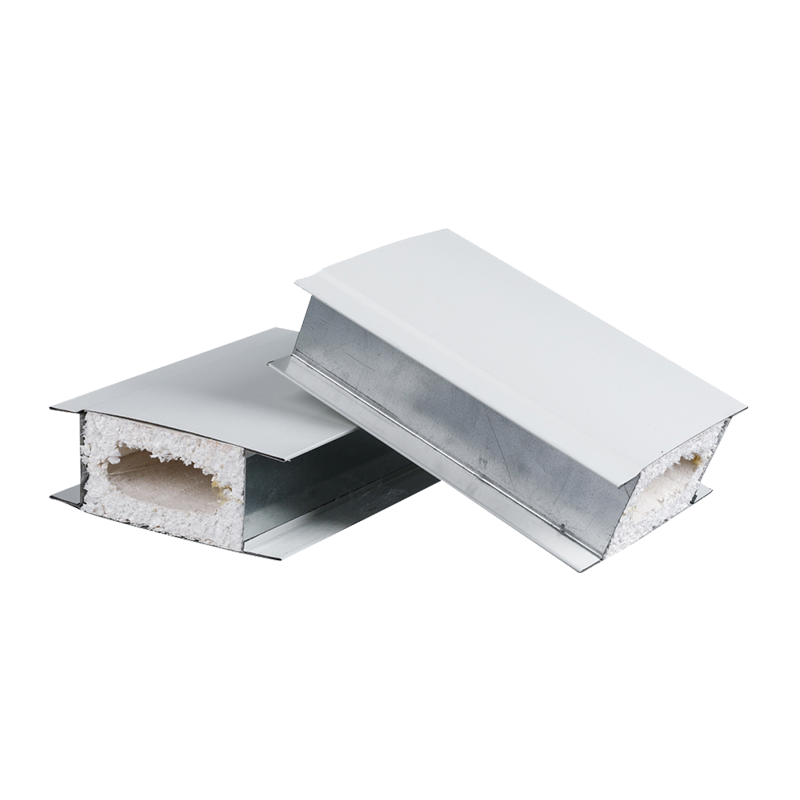
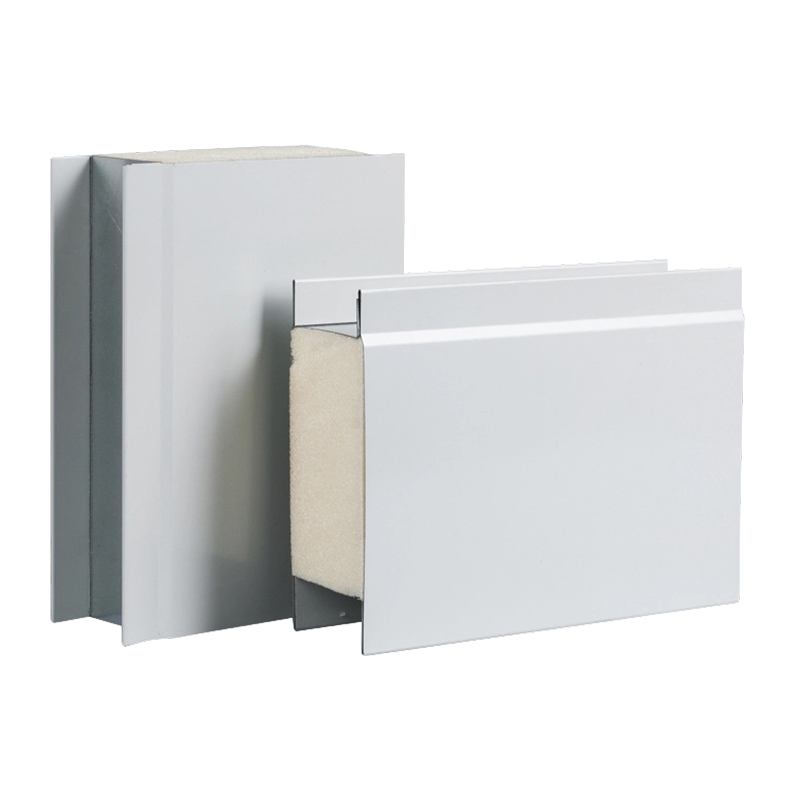
The panels and filters below are part of the same Modular Cleanroom Construction range, built to work together across panel walls, FFU housings, and filter replacement cycles.
Four Signals That Say a Filter Needs Replacing
Waiting for a visible drop in cleanliness readings means the filter has already been failing for a while. These four indicators catch the problem earlier.
| Indicator | Normal Range | Replace When |
| Initial resistance (H13/H14) | 180-280 Pa | Reaches 1.5-2x starting value |
| Downstream particle count | Stable, no drift | 0.5um count exceeds the class limit |
| PAO or DOP leak scan | Penetration under 0.01% for H14 | Any scan point exceeds the limit |
| Cumulative run time | Within 3-5 year design life | Past manufacturer recommended hours |
Sizing and Seal Compatibility With the Existing Housing
A replacement Cleanroom Air Filter has to match the original FFU housing dimensionally, or the airflow will simply bypass the media through gaps at the frame.
- Outer dimensions: common sizes run 1170x570x69mm, 610x610x69mm, and 1220x610x69mm, with thickness at 69mm for standard depth or 90mm where more dust-holding capacity is needed. Dimensional tolerance should stay within plus or minus 1.5mm.
- Seal type: gel seal suits higher grade cleanrooms and outperforms a gasket seal on long-term airtightness; a standard gasket in PE, EVA, or neoprene should compress 25 to 30 percent of its original thickness.
- Flange profile: a knife-edge flange pairs with gel seal, while a flat flange pairs with gasket seal. The replacement filter must use the same flange profile as the housing it sits in.
- Separator material: aluminum separators resist corrosion and humidity better than paper separators, which are only suited to dry, low-humidity spaces.
- Protective screen: a stainless steel or powder coated screen on the downstream face, mesh no larger than 5x5mm, protects the media from damage during handling.
Before ordering, it helps to measure the old filter directly and check it against the housing drawing, or send the supplier a sample unit and part number so the replacement is matched exactly.
Ten-Step Installation Sequence
The installation method affects seal integrity as much as the filter itself. A rushed swap can undo the benefit of a correctly specified replacement filter.
| Step | Action |
| 1 | Lock out FFU power, put on cleanroom garments, and stage the new filter for inspection |
| 2 | Loosen clamps or screws and remove the old filter without striking the housing interior |
| 3 | Wipe housing walls, flange surfaces, and seal grooves with isopropyl alcohol, working inside out |
| 4 | Check the flange for warping, rust, or scratches and repair anything over 1mm deviation |
| 5 | Set the new filter in place with the airflow arrow pointing into the room |
| 6 | Tighten clamps in a diagonal alternating pattern, around 2-4 N.m torque |
| 7 | Reinstall the diffuser plate or distribution film evenly |
| 8 | Power on and check fan noise plus face velocity at a minimum of five points |
| 9 | Run a PAO leak scan across the media face and the frame seal |
| 10 | Log the date, filter serial number, and starting resistance, then label the frame |
Acceptance Checks After Replacement
A swap is not finished until these checks confirm the room has returned to spec.
| Check | Pass Criteria | If It Fails |
| Face velocity | Within 15% of rated velocity, uniformity within 20% | Adjust fan speed or check for obstructions |
| PAO leak scan | Under 0.01% for H14, under 0.03% for H13 | Reseal the frame or replace the filter |
| Initial resistance | Matches manufacturer spec range | Check gauge calibration and tubing |
| Noise level | At or below 58 dB(A) | Inspect fan impeller balance and mounting |
Where Cleanroom Air Filters Get Used
The same filter and FFU combination scales across very different industries once the media grade and housing are matched to the risk level:
- Pharmaceutical manufacturing and fill-finish lines, paired with Pharmaceutical Cleanroom Systems and Medical Cleanroom Panels
- Semiconductor and electronics assembly, often built with Stainless Steel Cleanroom Panels or Aluminum Honeycomb Cleanroom Panel walls
- Hospital operating rooms and isolation wards, frequently combined with an Air Shower Room at the entry point
- Food processing lines requiring Explosion-proof FFU Fan Filter Unit configurations near dust sources
- Research facilities using Laboratory Cleanroom Panels alongside a Cleanroom Pass Through Window for sample transfer
Five Checks Before Buying Replacement Filters
Filter quality varies widely across suppliers even at the same stated grade, so a short checklist before purchase saves rework later.
- Media quality: fine glass fiber media holds efficiency and resistance steady over its service life; low grade media degrades quickly and can tear under normal airflow.
- Test documentation: each filter should ship with an individual scan report showing efficiency, resistance, and the location of the highest leak point, following EN 1822 or IEST standards.
- Sealant condition: the bond between media pack and frame should be polyurethane or epoxy, even in color, with no bubbles or cracking, and should hold at 50Pa without leaking.
- Frame precision: flatness within 1mm and diagonal difference within 2mm; 6063-T5 aluminum alloy frames resist corrosion better than galvanized steel.
- Certification and warranty: look for ISO 9001 or similar certification and a warranty covering 1-2 years on efficiency and structural integrity.
Custom Cleanroom Panels, Cleanroom Wall Panels, and Cleanroom Doors all connect to the same air filtration strategy, so it usually works out simpler to source filter, panel, and FFU components from one supplier that can match part numbers exactly rather than mixing brands across a Cleanroom Sandwich Panel build.
Message Feedback
Product Categories
Easily navigate and discover our complete range of solutions through our logically structured product
categories.




- E-Mail: [email protected]
- Tel: +86 18968239620
- Address: Room No.905, He Yuan Mansion, No. 382, Tianda Lane, Ningbo Southern Business District, Yinzhou Ningbo China
Quick Links
Contact Us
© Copyright Zhejiang Kaisier Clean Technology Co.,Ltd.
All Rights Reserved.
 Cleanroom Systems Manufacturer
Modular Cleanroom Solutions Factory
Cleanroom Systems Manufacturer
Modular Cleanroom Solutions Factory
-
+86 18968239620
-
-
