

 en
 English
 русский
 Español
 عربى
 ไทย
China Cleanroom Manufacturer Export to Middle East: A Practical Buyer's Guide
2026-09-28 - Last Updated: 2026-09-28
Content
- 1 Three Capabilities That Separate a Workable Supplier From a Cheap One
- 2 Match the Cleanroom Class to the Panel Build
- 3 Heat, Dust and Salt: What Actually Changes in Gulf Conditions
- 4 Air Showers, Pass-Through Boxes and Doors: Small Items, Big Delays
- 5 Freight, Documents and Payment
- 6 A Short Vetting Checklist Before You Place the Order
- 7 Frequently Asked Questions
A Dubai contractor took delivery of 1,600 square metres of 50 mm cleanroom panels for an ISO 7 filling suite. Everything arrived on time and matched the drawings. The problem appeared at commissioning: gaskets built for a 25 degrees Celsius indoor environment had hardened in a warehouse that sits above 45, and two interlocked pass-through boxes would not hold pressure against the room.
Wrong product? No. Wrong specification.
The short version: a China cleanroom manufacturer that exports successfully to the Middle East is one that quotes against your climate, your conformity regime and your installation sequence, not against a generic catalogue. Get those three aligned and price becomes a normal commercial conversation.
Three Capabilities That Separate a Workable Supplier From a Cheap One
Before comparing quotations, decide what you are actually buying. On Gulf projects, three supplier capabilities decide whether a shipment turns into a working cleanroom.
Climate-rated materials
Coastal sites such as Jebel Ali, Dammam and Ras Laffan sit in the ISO 9223 C5-M corrosion band, where salt-laden air attacks coated steel, fasteners and aluminium. Inland sites in Saudi Arabia and Iraq trade salt for dust and extreme summer heat. Gaskets, sealants, coatings and motor insulation have to be selected for those conditions, not for a 23 degrees Celsius laboratory.
Conformity and customs documentation
Saudi Arabia requires a SABER certificate of conformity, and the UAE applies ESMA and ECAS rules to many imported building products. A manufacturer that has never exported to the region often cannot produce a valid certificate of origin or fire test report fast enough to avoid demurrage.
Project-stage supply rather than one-off selling
Cleanroom fit-outs are phased. Panels, doors and windows install first; FFUs, filters and pass-through boxes follow weeks later. A supplier who can hold a shipment schedule and ship partial loads without re-quoting is worth more than a five percent discount.
Match the Cleanroom Class to the Panel Build
Start from the classification and work backwards. Class 100 (ISO 5) filling suites and Class 10,000 (ISO 7) support areas can share a wall system, but the cleaning regime, fire rating and structural load differ enough to change the panel core.
| Panel type | Core | Thickness | Best fit | Watch out for |
|---|---|---|---|---|
| Handmade rock wool panel | Rock wool | 50 / 75 / 100 mm | Aseptic suites, fire-rated walls | Heavier than PU; ceiling grid must carry the load |
| Machine-made PU panel | Polyurethane | 50 mm | Food processing, cold rooms, electronics | Lower fire performance; confirm core density |
| Magnesium oxide panel | MgO with rock wool | 50 / 75 / 100 mm | Hospitals, laboratories, corridors | Quality varies widely between suppliers |
| Aluminium honeycomb panel | Honeycomb core | 50 mm | Large spans, lightweight ceilings | Limited thermal insulation |
| Stainless steel panel | Rock wool or PU, 304 / 316 face | 50 mm | Wet wash-down, biotech, sterile filling | Higher cost and longer lead time |
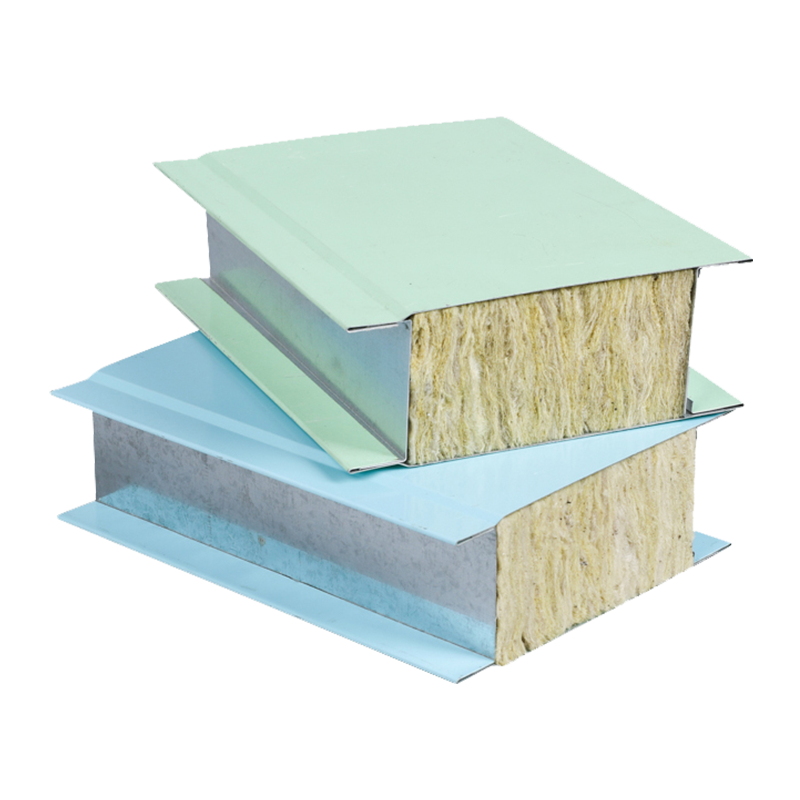 Modular Cleanroom Wall Panels ManufacturerCleanroom panels are high-performance building materials specifically designed for cleanroom systems. They are widely used in various environments requiring controlled...View Product →
Two details cause most of the rework. Thickness first: 50 mm is common in temperate plants, while 100 mm is standard in Gulf pharmaceutical work because it cuts heat gain through the envelope. Joint second: a tongue-and-groove or cam-lock joint with a double gasket survives thermal cycling where a single flat gasket does not.
If you are still comparing wall systems, this guide to cleanroom system selection sets out the trade-offs in more detail.
Heat, Dust and Salt: What Actually Changes in Gulf Conditions
The equipment that fails earliest in the Middle East is rarely the panel. It is the air handling chain and the seals.
Outdoor design conditions drive the duty on everything behind the wall. A plant running eight air changes per hour at 23 degrees Celsius in Shanghai needs different pre-filtration and FFU loading in Riyadh, where incoming air can carry fine dust for months at a time. Three adjustments pay for themselves inside the first maintenance cycle.
- Pre-filter protection. An aluminium-frame primary filter ahead of the HEPA stage keeps the pressure drop curve flat for longer.
- Seal specification. Silicone gaskets and neutral-cure sealants keep their elasticity through high surface temperatures; standard EPDM and acetic-cure silicone do not.
- Structural movement. Long panel runs expand and contract. Expansion joints at six to eight metre intervals prevent the bowing that appears after the first summer.
Along the coast, coating choice matters as much as panel core. Polyester-coated steel may be acceptable inland; within a few kilometres of the sea, a heavier coating or stainless hardware is the safer call.
Panels 34% FFUs and filters 24% Doors and windows 14% Aluminium profiles 13% Pass-through and air showers 9% Sealants and fixings 6%
Illustrative material value split in a typical ISO 7 pharmaceutical fit-out, not a quotation.
For air handling, verify voltage and frequency before the order ships: 230/400 V at 50 Hz is the regional standard, and units built for other markets do appear in mixed stock.
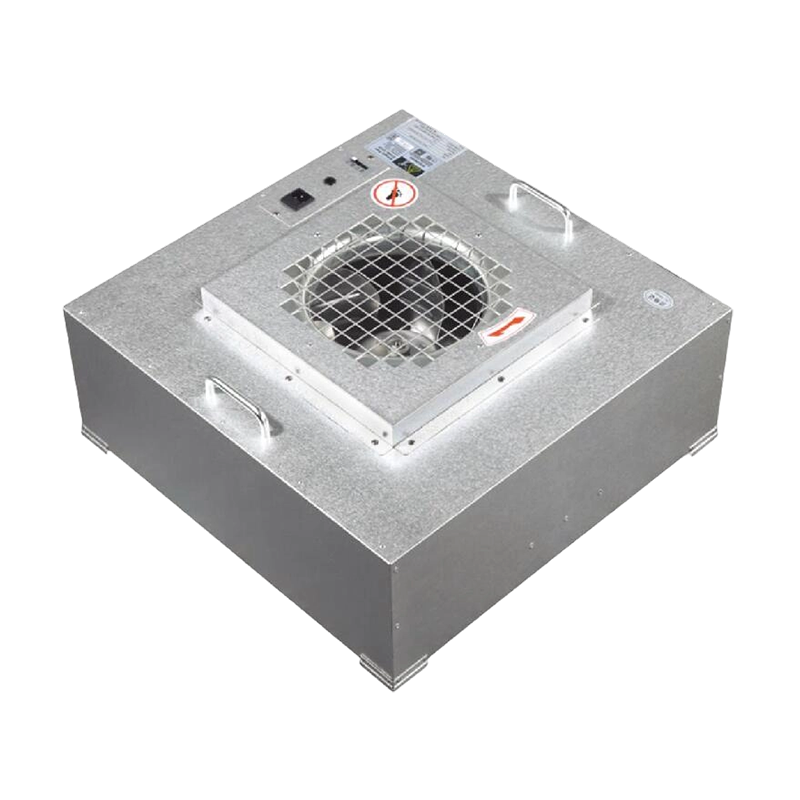 FFU unitProduct Features: The fan uses a German EBM direct-drive high-efficiency centrifugal fan, which features a long lifespan, low noise, maintenance-free operation, low vi...View Product →
Air Showers, Pass-Through Boxes and Doors: Small Items, Big Delays
Access equipment is where schedule slips hide. These items are inexpensive next to the wall system, so they are usually ordered last, and a six-week lead time then lands directly on the critical path.
| Item | How it works | Best for | Practical note |
|---|---|---|---|
| Mechanical interlock pass-through | Doors lock each other physically | General material transfer | No power needed; slower under heavy traffic |
| Electronic interlock pass-through | Solenoid or relay control | Controlled access, high-risk transfer | Needs power and a control interface |
| Self-cleaning pass-through | Integrated fan and filter unit | Transfer into sterile areas | Plan filter service access |
| Air shower | High-velocity jets at entry | Personnel and cart entry | Confirm 50 Hz supply and cycle time |
On doors, traffic usually settles the decision. Stainless steel framed doors resist wash-down and suit aseptic areas. Swing impact doors are the practical answer where forklifts and pallet trucks pass through daily, because they absorb impact instead of passing it into the frame.
Cleanroom door ManufacturerThe cleanroom door opens and closes smoothly, conveniently, and reliably, meeting special requirements such as airtightness, sound insulation, and intelligent control....View Product →Freight, Documents and Payment
Cleanroom panels are bulky rather than heavy. Volume fills a container long before the weight limit does, so ask for a loading plan with the quotation. A 40-foot high cube packed with 1,150 mm wide panels leaves very little slack; add doors, windows and profiles to the same shipment and you should expect two containers.
Documents to request before the deposit
- Certificate of origin, legalised if your customs broker requires it
- Fire test report for the panel core, with the standard named (GB 8624 or ASTM E84)
- Material safety data sheet for polyurethane or magnesium cores
- Mill certificate for stainless steel faces and hardware
- SABER, SASO or ESMA conformity documents where the destination port demands them
- Packing list with panel sizes, quantities and gross weight per package
Indicative port-to-port sea transit in days from China, excluding customs clearance and inland delivery.
Incoterms deserve their own sentence. FOB Ningbo or Shanghai suits buyers who already have a forwarder and a broker in the Gulf. CIF takes the freight negotiation off your desk on a first order. DAP is worth paying for on phased projects where the site cannot store an entire delivery under cover.
Payment terms are usually 30 percent deposit with the balance against the bill of lading copy, or a letter of credit at sight for larger contracts. Ask which structure your supplier can actually service, because a letter of credit the exporter has never handled becomes a delay at the bank rather than at the port.
A Short Vetting Checklist Before You Place the Order
- Ask for the panel drawing, not a photo. Joint detail, gasket type and core density should all appear on it.
- Confirm the fire test standard and the tested thickness, not just the core material.
- Ask which port the goods ship from and which forwarder handles them.
- Request a loading plan and confirm whether the order fits one container.
- Check the electrical standard for FFUs, air showers and interlocks: 230/400 V, 50 Hz.
- Agree who issues the conformity certificate and who pays for it.
- Fix the spare parts list before shipment: gaskets, filter sets, door closers, interlock boards.
Frequently Asked Questions
How long does sea freight take from China to Gulf ports?
Indicative port-to-port transit runs about 20 days to Jebel Ali, 22 to Hamad, 24 to Dammam and up to 28 to Umm Qasr, before customs clearance and inland trucking.
Is SABER certification required for cleanroom panels shipped to Saudi Arabia?
Building products in scope need a certificate of conformity issued through the SABER platform. Confirm it early with your importer of record, because the certificate is tied to the shipment rather than to the supplier.
Why do cleanroom gaskets fail in the Gulf?
Heat and thermal cycling rather than chemistry. A gasket that compresses correctly at 23 degrees Celsius can take a permanent set at 50, which opens the joint and shows up as pressure loss in commissioning reports.
Exporting cleanroom systems to the Middle East is a specification discipline before it is a logistics exercise. Set the panel build against the classification and the local climate, freeze the fire and conformity documents, plan the container around volume rather than weight, and stage the shipment to match the installation sequence.
Zhejiang Kaisier Clean Technology produces cleanroom panels, doors, windows, aluminium profiles, FFUs, air showers and filters across four production bases in China and Thailand, with a range covering Class 100 to Class 300,000 requirements. If you are planning a Gulf project, send the drawings and the site conditions and we will tell you which specifications should change before you order, not after.
Message Feedback
Product Categories
Easily navigate and discover our complete range of solutions through our logically structured product
categories.



- E-Mail: [email protected]
- Tel: +86 18968239620
- Address: Room No.905, He Yuan Mansion, No. 382, Tianda Lane, Ningbo Southern Business District, Yinzhou Ningbo China
Quick Links
Contact Us
© Copyright Zhejiang Kaisier Clean Technology Co.,Ltd.
All Rights Reserved.
 Cleanroom Systems Manufacturer
Modular Cleanroom Solutions Factory
-
+86 18968239620
-
-
