

 en
 English
 русский
 Español
 عربى
 ไทย
Cleanroom Door Types: Sliding Doors vs Swing Doors — How to Choose the Right One
2026-10-12 - Last Updated: 2026-10-12
Content
- 1 How a Swing Cleanroom Door Behaves Under Pressure
- 2 Where Sliding Cleanroom Doors Earn Their Cost
- 3 Sliding vs Swing Cleanroom Doors: Side-by-Side
- 4 Materials, Gaskets and Hardware That Decide Performance
- 5 A Practical Selection Checklist
- 6 Frequently Asked Questions
- 7 Choosing Between the Two Without Over-Specifying
A 4 m² airlock between an ISO 8 corridor and an ISO 7 filling room leaves roughly 900 mm of clear width once the wall panels are up. Fit a 1000 mm swing leaf into that gap and it sweeps a full metre of arc straight into the operator's working zone. A sliding leaf closes without stealing floor space, but it needs a pocket or a surface track, and a drive if staff are pushing trolleys through it all shift.
That single trade-off explains most cleanroom door decisions. Swing doors are the default: simpler, cheaper, self-closing and easier to seal against a pressure differential. Sliding doors win when the opening is tight, traffic is heavy, the leaf is too bulky to push, or the room has to stay sealed while people and goods pass. Neither type is universally better, and the wrong choice usually surfaces months later as elevated particle counts at the threshold or a maintenance visit every fortnight.
Below is how each type behaves in a classified space, where the real cost of ownership sits, and where each stops being the sensible answer. If the wider room concept is still open, the cleanroom system selection guide covers panels, ceilings and airflow before you reach the door schedule.
How a Swing Cleanroom Door Behaves Under Pressure
A swing door is a frame, a hinge set, a leaf and a gasket. In a cleanroom the gasket is what matters. When the leaf closes, the perimeter seal must compress enough to stop air migrating between two rooms held 10 to 15 Pa apart. That is why cleanroom leaves are specified with continuous gaskets, adjustable hinges and a closer sized for the leaf mass rather than whatever was left in the van.
The leaf is normally hung to swing toward the higher-pressure side. Pressure then pushes the door into its frame instead of away from it, so a tired closer does not quietly turn the door into a leak path. The practical consequence is that a swing leaf opens into the cleaner room, which is worth checking against gowning flow and trolley routes on the drawing rather than on site.
Where swing doors are the right answer
- Low to moderate traffic, a few dozen movements per shift.
- Narrow apertures, typically 800-1000 mm single leaf or 1200-1800 mm double leaf.
- Rooms where a repeatable seal matters more than cycle speed.
- Walls with no space for a track, a pocket or a head-mounted operator.
- Apertures with no power, where a spring closer is the simplest fail-safe.
Inspection is the quiet advantage. You can see the gasket, feel the compression, and adjust the closer in minutes with the room back in service.
 Swing Impact Door for High-Traffic EnvironmentsA protective swing door with impact-resistant panels and easy inspection, suited to hospitals, clean rooms, and warehouses where frequent traffic demands durability.View Product →
Where Sliding Cleanroom Doors Earn Their Cost
A sliding door trades a hinge for a mechanism: rollers, a track, a bottom guide and, on most installs, a belt or rack drive. The leaf travels parallel to the wall, so it consumes no swing arc. That is the single biggest reason it gets specified in compact airlocks, cold rooms and material corridors where a swing leaf would foul racking or a machine guard.
Common sliding configurations
- Surface-mounted: track fixed to the clean-side or dirty-side face, the easiest arrangement to install and service.
- Telescopic: two or more leaves of unequal width stack into a short pocket when wall length is limited.
- Bi-parting: two leaves open from the centre for wide openings and high flow.
- Hermetic sliding: a drop-down or inflatable gasket seals the leaf only once it is fully closed.
Sealing is where sliding doors historically fell short. A simple brush or lip gasket rubs along the frame on every cycle and leaks as soon as the leaf starts to flex. A drop-down gasket avoids that wear because it contacts the floor and frame only in the closed position, and its leakage figures come close to those of a swing door.
Drive choice then changes the economics. A powered sliding door can be interlocked with a pass-through window or an air shower so that only one aperture opens at a time, something a manual swing leaf cannot do without electric strikes fighting the closer. Above roughly 2000 mm aperture width, automation also removes the reach and effort problem that turns a heavy manual leaf into a safety issue.
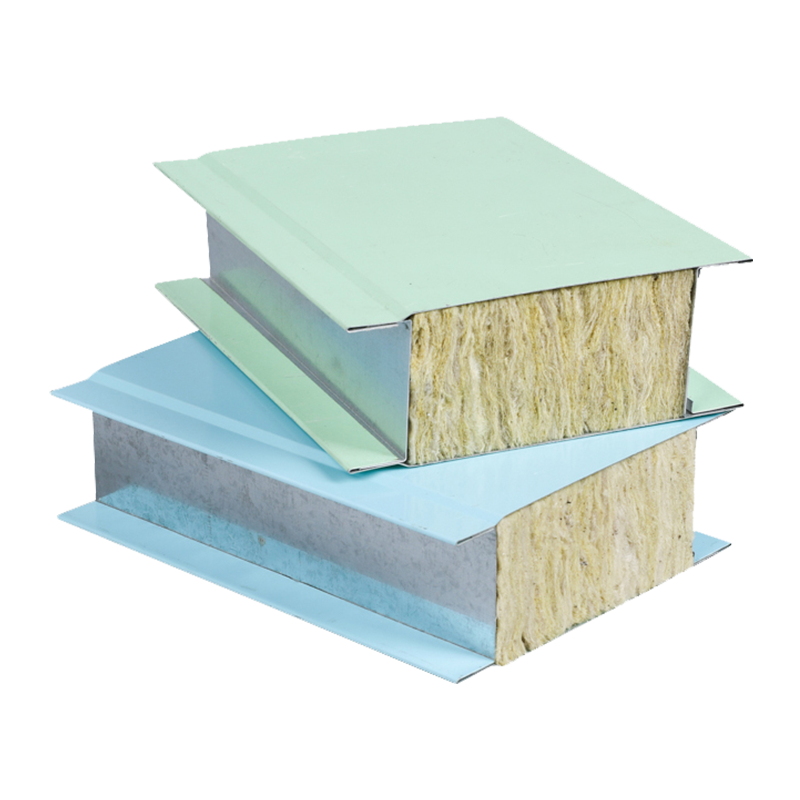 Cleanroom door ManufacturerKaisier Cleans the Globe Tech Empowers TomorrowView Product →
Sliding vs Swing Cleanroom Doors: Side-by-Side
Both columns assume the same opening in a panel wall, a differential of 10-15 Pa and manual use unless stated otherwise. The figures shift as soon as automation or a hermetic gasket is added.
| Criteria | Swing door | Sliding door |
|---|---|---|
| Clearance needed | Arc equal to leaf width, about 1 m | Track or pocket along the wall face |
| Seal quality | Continuous gasket compressed at the latch edge | Depends on gasket; drop-down type matches swing |
| Pressure behaviour | Pressure helps seat the leaf in the frame | Pressure loads the leaf against the guide |
| Cycle time | 2-4 s manual or powered | 1-3 s powered, slow if pushed by hand |
| Traffic capacity | Suits a few dozen movements per shift | Suits continuous flow and trolley traffic |
| Wide openings | Double leaf gets heavy and needs space | Bi-parting or telescopic keeps it compact |
| Power loss | Spring closer returns the leaf to closed | Manual release; some drives fail open |
| Maintenance points | Hinges, closer, gasket | Rollers, track, belt, guide, gasket |
| Installed cost | Lower baseline | Higher once drive and controls are included |
| Best fit | Airlocks, gowning rooms, ISO 5-8 suites | Tight wall runs, cold rooms, automated lines |
Materials, Gaskets and Hardware That Decide Performance
Type is only half the specification. A sensible swing door with a poor gasket fails, and a sliding door with a well-designed hermetic seal passes. Five details separate a door that holds its class from one that needs adjusting every month.
- Leaf construction: powder-coated steel for dry areas, aluminium alloy with HPL facings for wipe-down zones, stainless steel 304 or 316 where washdown and corrosion resistance matter.
- Gasket: continuous EPDM or silicone, replaceable without dismantling the frame, compressed by adjustable hardware rather than force.
- Vision panel: flush-glazed, and double-glazed between classified zones so the glass does not become the leak path.
- Hardware: stainless hinges and a closer rated for the leaf mass, plus a floor guide on any wide sliding leaf.
- Control: interlocks, foot sensors, card readers and a mechanical emergency release that works without power.
Stainless leaves are the common answer in pharmaceutical and food plants because they tolerate frequent cleaning without surface damage. The real question is not whether stainless looks better, but whether the cleaning regime would strip a coated finish inside the asset's life.
 Stainless Steel Cleanroom Door for GMP EnvironmentsA stainless steel cleanroom door with seamless construction and multi-stage sealing, suitable for GMP cleanrooms and sterile environments requiring frequent cleaning.View Product →
A Practical Selection Checklist
Work through these before the door schedule is fixed. Any one of them can change the type, not just the model.
- Measure the clear width and the free wall face on both sides; the answer often eliminates one type immediately.
- Count movements per shift per aperture, trolleys included, and decide whether a manual leaf is realistic.
- Confirm the pressure differential and its direction, then hang or guide the leaf accordingly.
- Check the cleaning regime, because it decides the finish long before aesthetics do.
- Decide whether the aperture must interlock with a pass-through window, air shower or access panel.
- Agree the failure mode: on power loss, should the door close, stay open, or release for manual use?
Frequently Asked Questions
Which type suits an ISO 5 cleanroom?
A swing door is the usual starting point, because a continuous compressed gasket is the simplest reliable seal at that class. Choose hermetic sliding only if the layout has no room for a swing arc, or if the aperture must interlock with the next zone.
Can a sliding door match a swing door on pressure?
Yes, with a drop-down or inflatable gasket that seals only in the closed position. A plain brush seal will leak as soon as the leaf flexes, however well the track is aligned.
How much clearance does a swing leaf need?
Allow roughly the leaf width plus 50-100 mm for the handle and the operator, so a 900 mm leaf needs about a metre of clear floor on the side it opens toward.
Do sliding cleanroom doors always need power?
No. Leaves up to roughly 60 kg can be hand-operated on good rollers. Above that, manual use strains both the operator and the track alignment.
Choosing Between the Two Without Over-Specifying
Most facilities end up with both types, and that is the correct outcome. Swing leaves in airlocks and gowning rooms, where a hard seal and simple maintenance matter; sliding leaves where the wall run is short, the traffic is constant, or the opening has to interlock with the next zone.
Decide the type from clearance, differential pressure and traffic count, then spend the remaining budget on the gasket, the hardware and the drive. If you want the door schedule reviewed alongside the panel and ceiling layout, send us the drawings and we will come back with a buildable specification.
Message Feedback
Product Categories
Easily navigate and discover our complete range of solutions through our logically structured product
categories.



- E-Mail: [email protected]
- Tel: +86 18968239620
- Address: Room No.905, He Yuan Mansion, No. 382, Tianda Lane, Ningbo Southern Business District, Yinzhou Ningbo China
Quick Links
Contact Us
© Copyright Zhejiang Kaisier Clean Technology Co.,Ltd.
All Rights Reserved.
 Cleanroom Systems Manufacturer
Modular Cleanroom Solutions Factory
-
+86 18968239620
-
-
